Few dishes say “Penang breakfast” quite like a steaming bowl of Hokkien Mee.
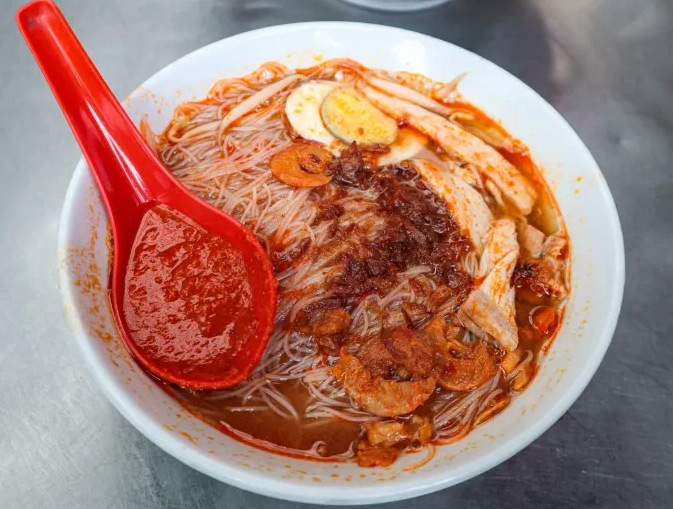
The first thing you’ll notice is the broth: deep orange-red, intensely aromatic and carrying the unmistakable sweetness of prawns. Beneath it sits a mixture of yellow noodles and bee hoon, usually topped with prawns, slices of pork, hard-boiled egg, kangkung and crispy fried shallots.
Then comes the chilli.
Stir a spoonful through the broth and what was already rich becomes deeper, spicier and even more satisfying.
This is Penang Hokkien Mee — although visitors from elsewhere in Malaysia may know a similar dish simply as prawn mee.
And if you’re coming from Kuala Lumpur, forget everything you think Hokkien Mee looks like. Penang’s version has almost nothing in common with KL’s famous plate of thick noodles fried in dark soy sauce.
Hokkien Mee is one of the essential dishes to seek out when exploring Penang’s hawker culture, alongside Char Koay Teow, Curry Mee, Char Koay Kak and Chee Cheong Fun.
Better still, there isn’t one definitive bowl.
Some hawkers produce dark, concentrated stocks loaded with prawn flavour. Others keep the broth lighter and sweeter. Some specialise in extravagant additions such as pork ribs and large prawns, while neighbourhood stalls keep things beautifully simple.
What Is Penang Hokkien Mee?
Penang Hokkien Mee is a prawn noodle soup made with a deeply flavoured stock traditionally built around prawn heads and shells together with pork.
The broth is the soul of the dish.
Prawn shells and heads are cooked down to extract their sweetness and seafood flavour, while pork contributes richness and body. Chilli and seasonings give the soup its characteristic reddish appearance and savoury-spicy character.
The noodles are typically a combination of:
- Yellow wheat noodles
- Bee hoon or rice vermicelli
And a traditional bowl may be topped with:
- Prawns
- Sliced pork
- Hard-boiled egg
- Kangkung
- Bean sprouts
- Fried shallots
- Sambal
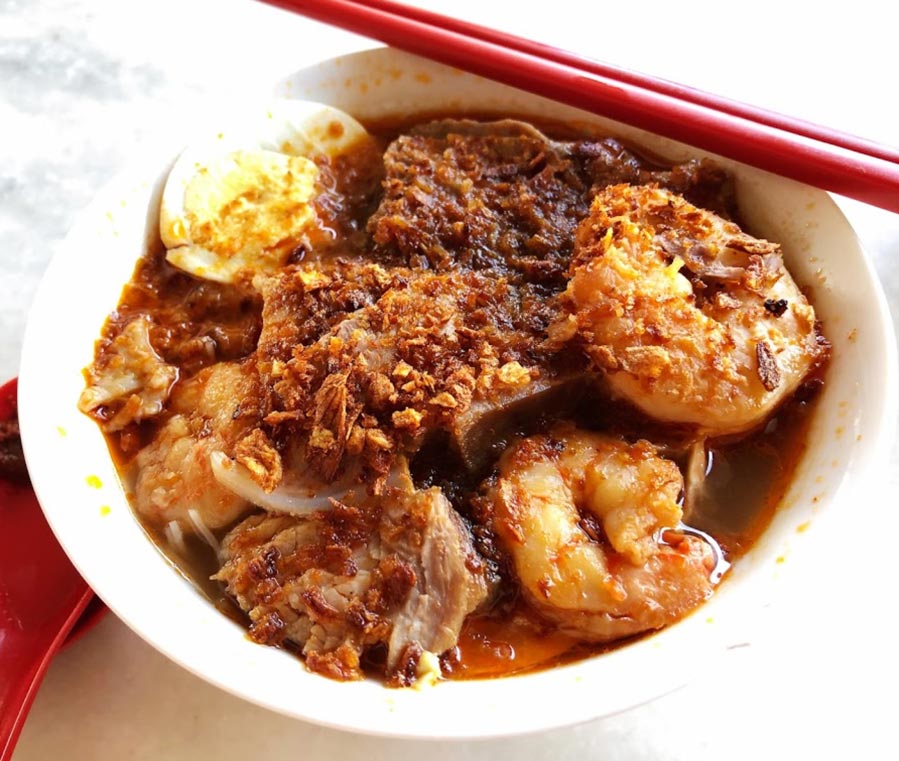
Some stalls allow you to upgrade your bowl with pork ribs, intestines, pork belly, larger prawns or other additions.
It’s a relatively simple collection of ingredients.
But when the broth is good, everything changes.
Why Is It Called Hokkien Mee?
“Hokkien” refers to Fujian in southern China and to the Hokkien-speaking communities whose ancestors migrated throughout Southeast Asia.
“Mee” simply means noodles.
Penang has historically had a large Hokkien community, and Hokkien remains deeply embedded in the island’s Chinese language and food culture.
However, the Hokkien Mee eaten in Penang today has developed into a distinctly local dish.
That’s why ordering “Hokkien Mee” in different Malaysian cities can produce completely different meals.
Penang Hokkien Mee vs KL Hokkien Mee
This causes endless confusion for visitors.
Order Hokkien Mee in Penang and you’ll receive a bowl of reddish prawn noodle soup.
Order Hokkien Mee in Kuala Lumpur and you’re likely to receive thick yellow noodles stir-fried with dark soy sauce, pork, cabbage and other ingredients.
They share a name but are essentially different dishes.
Penang Hokkien Mee
- Soup-based
- Prawn and pork broth
- Yellow noodles + bee hoon
- Reddish-orange colour
- Prawns and pork
- Usually spicy
- Known elsewhere as prawn mee
KL Hokkien Mee
- Stir-fried
- Thick yellow noodles
- Dark soy sauce
- Very dark brown appearance
- Pork, cabbage and other ingredients
- Characteristically smoky and savoury
So if someone in Penang asks whether you want Hokkien Mee, don’t expect the black noodles you might have eaten in KL.
Hokkien Mee vs Prawn Mee: Are They the Same?
In Penang, the dish is overwhelmingly known locally as Hokkien Mee.
Travel south and similar noodles are more commonly called Prawn Mee or Har Mee.
The terminology is therefore partly regional.
For visitors searching online, you’ll frequently encounter terms such as “Penang Prawn Mee”, “Hokkien Prawn Mee” and “Har Mee” referring to broadly the same family of dishes.
But when ordering from a traditional hawker in Penang?
Ask for Hokkien Mee.
What Makes a Great Penang Hokkien Mee?
Every Penangite has a favourite stall, and much of that preference comes down to the broth.
1. A Deep Prawn Broth
The first spoonful should immediately taste of prawns.
Cooking down the heads and shells extracts a natural sweetness and umami that forms the foundation of the soup.
A weak broth makes everything else irrelevant.
2. Pork for Richness
Pork bones add body and savouriness to the stock, complementing the sweetness of the prawns.
The best broths balance both rather than tasting overwhelmingly of either ingredient.
3. Fragrant Chilli
Hokkien Mee should have heat, but chilli isn’t there simply to make you sweat.
A good sambal provides fragrance and additional depth.
4. Fried Shallots
Crispy fried shallots add aroma, sweetness and texture.
Their fragrance hitting the hot soup is one of the little details that makes a bowl immediately appetising.
5. Properly Cooked Noodles
The noodles should retain enough bite rather than becoming overly soft after sitting in hot broth.
Combining yellow noodles and bee hoon gives the bowl two contrasting textures.
6. Balanced Sweetness
Prawn broth naturally has some sweetness, but Hokkien Mee shouldn’t taste sugary.
The best bowls balance seafood sweetness, pork richness, saltiness and chilli heat.
Best Hokkien Mee in Penang
888 Hokkien Mee (Presgrave Street)
67-A, Lebuh Presgrave,
10300 George Town, Penang.
Wufoo Hokkien Prawn Noodle
13, Lebuh Katz,
10300 George Town, Penang.
Ah Koo’s Hokkien Mee

126, Jalan Perak,
10450 George Town, Penang.
Super Hokkien Mee @ One Corner Cafe

12, Jalan Bawasah,
10050 George Town, Penang.
Oh Lay Ee Hokkien Mee
13, Gat Lebuh Presgrave,
10300 George Town, Penang.
Ah Kooi Hokkien Mee
Jalan Tavoy, 10050
George Town, Penang.
Bridge Street Hokkien Mee
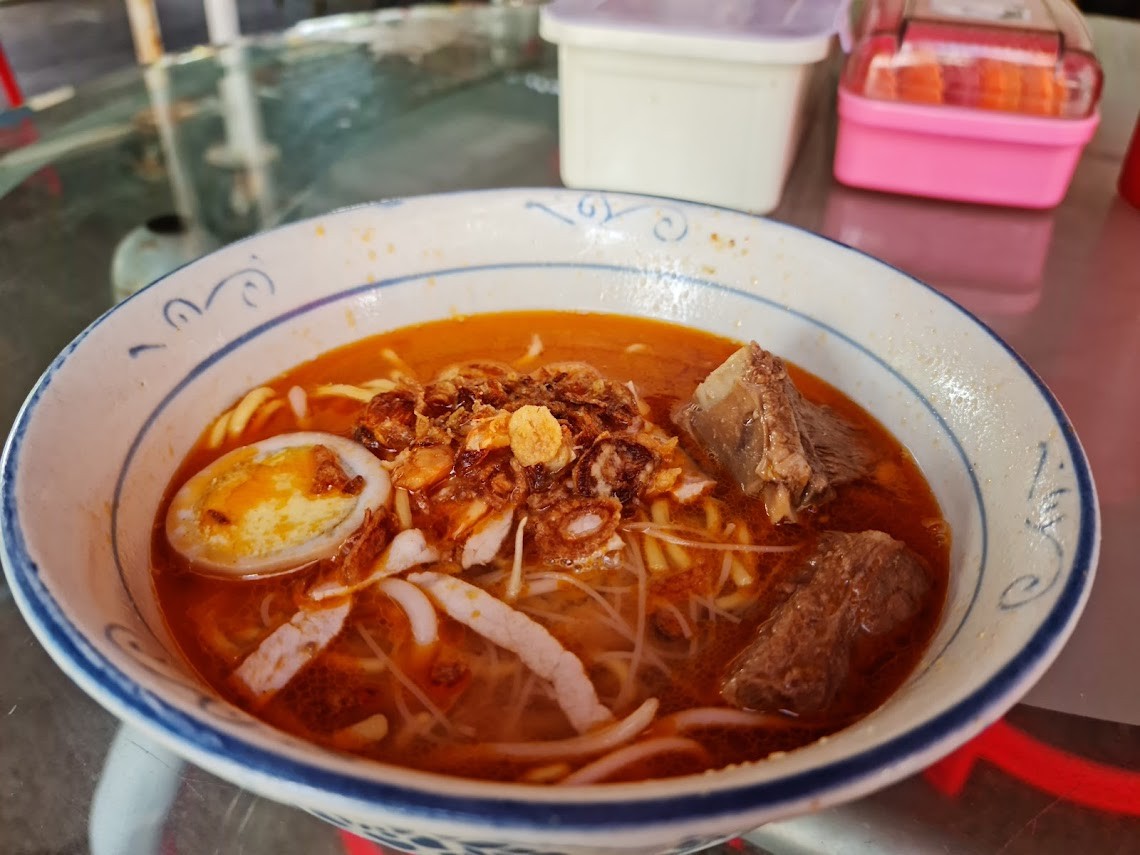
533, Lebuh Pantai,
10300 George Town, Penang.
Father’s Hokkien Mee
JJ Garden Food Court
Jalan Sungai Kelian, 11200 Tanjung Bungah, Penang.
Mu Tong Hokkien Mee @ The Shark
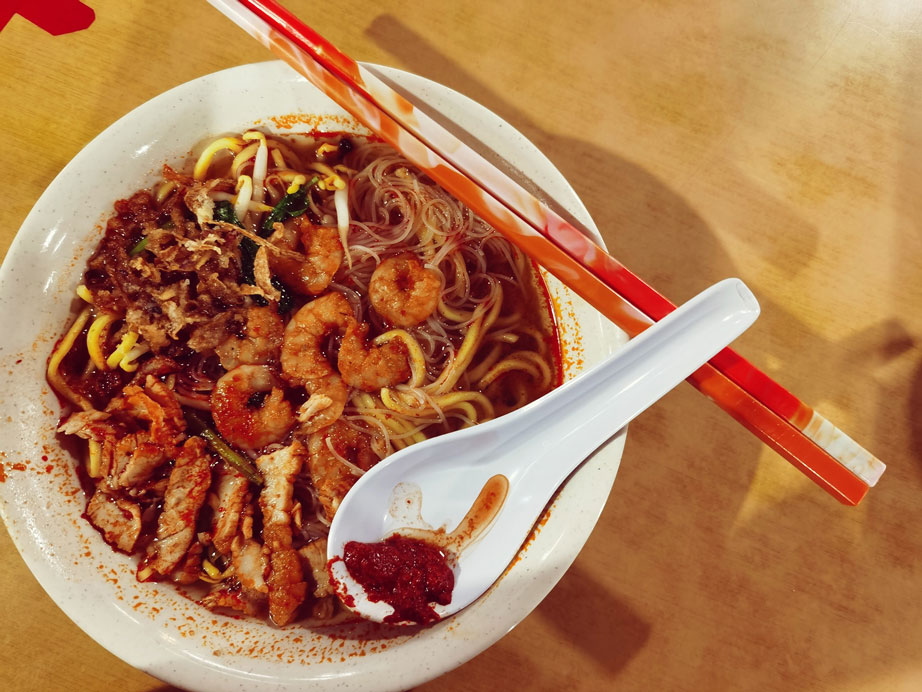
192, Jalan Burma, Kampung Syed,
10350 George Town, Penang.
Swee Kong Coffee Shop
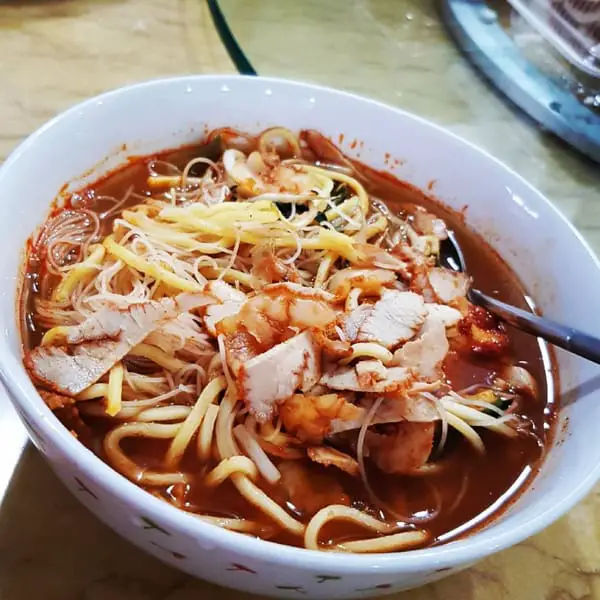
317, Jalan Burma,
10350 George Town, Penang.
Wah! Hokkien Mee
122, Jalan Gurdwara,
10300 George Town, Penang.
Paya Terubong Hokkien Mee Stall
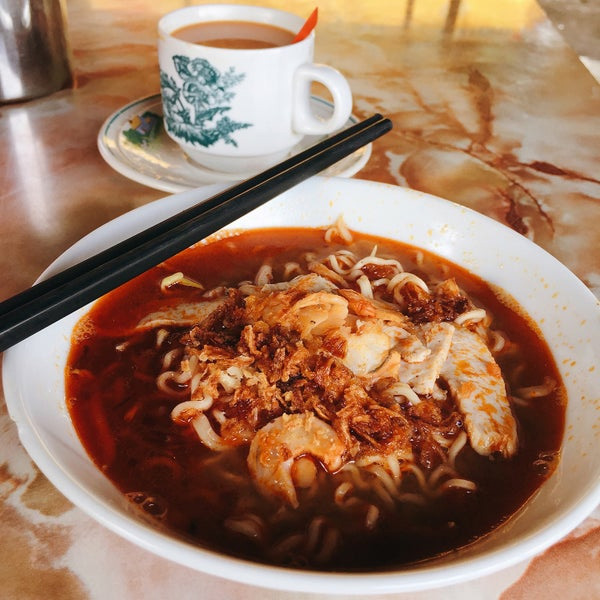
1003-D, Jalan Paya Terubong,
11060 Ayer Itam, Penang.
Hokkien Mee vs Loh Mee
These two dishes frequently appear together at Penang hawker stalls.
But they are very different.
Hokkien Mee
Hokkien Mee uses a reddish prawn-and-pork broth that is relatively fluid, spicy and intensely aromatic.
Loh Mee
Loh Mee uses a much thicker, darker gravy, traditionally thickened to create an almost silky consistency.
Garlic and vinegar can be added according to taste.
Hokkien Lor / Hokkien Loh
Can’t decide?
Order them mixed.
The combination brings together the prawn intensity of Hokkien Mee with the thick body of Loh Mee.
It’s one of those distinctly local orders that visitors may not realise exists until they see someone at the next table eating it.
What Should You Add to Hokkien Mee?
The basic bowl is usually enough for breakfast.
But certain additions can transform it.
Pork Ribs
One of the best upgrades.
Slow cooking allows the ribs to absorb the broth while becoming beautifully tender.
Extra Prawns
Worth considering at stalls particularly known for their seafood.
Intestines
A traditional addition for diners comfortable with offal.
Extra Egg
Hard-boiled egg absorbs the broth surprisingly well.
Fried Shallots
Already included at many stalls, but extra shallots provide even more aroma and crunch.
Is Penang Hokkien Mee Spicy?
Usually, yes — but the level varies enormously.
The broth itself may already contain chilli, while additional sambal allows you to increase the heat.
If you’re trying a famous stall for the first time, taste the broth before adding anything.
A great Hokkien Mee stock should be enjoyable even before you modify it.
Then add sambal gradually.
The objective isn’t simply maximum heat. You still want to taste the prawns.
Is Penang Hokkien Mee Halal?
Traditional Penang Hokkien Mee is generally not halal because pork and pork bones are commonly used in the broth and toppings.
However, halal adaptations of Penang-style prawn noodles do exist, using seafood or chicken-based stocks instead.
If halal status is important, don’t assume a stall is suitable simply because you can’t see pork among the toppings. The broth itself may contain pork.
Check current halal certification or confirm directly with the operator.
When Is the Best Time to Eat Hokkien Mee?
For many Penangites, Hokkien Mee is breakfast.
Some of the island’s most famous stalls begin serving early in the morning and finish before lunch.
But Hokkien Mee isn’t exclusively a morning dish.
Other stalls operate in the afternoon, evening or even late at night, which means you can realistically fit several different bowls into one Penang trip without eating prawn noodles for breakfast every day.
Check current operating hours before travelling specifically for a stall. Hawker rest days and opening times can change.
Hokkien Mee as Part of Penang’s Hawker Culture
The most interesting thing about Hokkien Mee isn’t necessarily finding the single “best” bowl.
It’s discovering how differently hawkers interpret something that appears so simple.
One broth might be aggressively prawny.
Another is sweeter.
Another has considerably more pork richness.
One hawker piles the bowl with toppings while another believes the broth should do almost all the talking.
That’s what makes Penang’s hawker culture so compelling.
The same principle applies when searching for the best Curry Mee, Char Koay Teow, Char Koay Kak or Chee Cheong Fun.
There isn’t one universal recipe.
There are generations of hawkers making their own versions, neighbourhoods developing favourites, and Penangites spending decades arguing about which one deserves the crown.
That’s part of the fun.
Frequently Asked Questions About Hokkien Mee in Penang
What is Penang Hokkien Mee?
Penang Hokkien Mee is a noodle soup made with a rich prawn-and-pork broth, typically served with yellow noodles and bee hoon, prawns, pork, egg, kangkung, fried shallots and chilli.
Is Penang Hokkien Mee the same as Prawn Mee?
Broadly, yes. Similar dishes are commonly called Prawn Mee or Har Mee elsewhere, while Penangites traditionally call their local version Hokkien Mee.
Is Penang Hokkien Mee the same as KL Hokkien Mee?
No. Penang Hokkien Mee is a prawn noodle soup. KL Hokkien Mee consists of thick noodles stir-fried in dark soy sauce.
Where can I find famous Hokkien Mee in Penang?
888 Hokkien Mee, Super Hokkien Mee, Ah Koo’s, Bridge Street Prawn Noodle and several stalls around Pulau Tikus and George Town are among the established names worth exploring.
What noodles are used in Penang Hokkien Mee?
A mixture of yellow wheat noodles and thin rice vermicelli, or bee hoon, is common.
Can I order only bee hoon or yellow noodles?
Yes. Most hawkers allow you to choose yellow noodles, bee hoon or a mixture of both.
What is Hokkien Lor?
Hokkien Lor combines Hokkien Mee’s prawn broth with the thick gravy used for Penang Loh Mee.
Can I get dry Hokkien Mee in Penang?
Some stalls offer a dry or kon lo variation in which the noodles are tossed with sauce and chilli rather than submerged entirely in broth.
Is Penang Hokkien Mee eaten for breakfast?
Very commonly. Many famous stalls operate during the morning, although other Hokkien Mee hawkers serve lunch, dinner or supper.
Is Penang Hokkien Mee halal?
Traditional versions commonly contain pork or pork bones and therefore should not be assumed to be halal. Check the individual operator if halal status is required.
Hokkien Mee is one of the best dishes for understanding Penang’s hawker culture.
At first glance, it’s just noodles and soup.
But taste several bowls and the differences become obvious.
The intensity of the prawn stock changes. The pork becomes more or less pronounced. One sambal is sweet and aromatic while another immediately brings the heat. Some stalls keep things beautifully simple; others let you pile the bowl with pork ribs, intestines and enormous prawns.
Start with one of the famous names such as 888 or Super Hokkien Mee.
Then go deeper.
Have breakfast at a neighbourhood coffee shop in Pulau Tikus. Find another bowl around Jalan Perak. Try Hokkien Lor. Order a dry version. Eventually, cross to mainland Penang and continue exploring there.
And don’t stop with Hokkien Mee.
Continue your Penang food journey with our guides to the best Curry Mee in Penang, best Char Koay Teow in Penang, best Char Koay Kak in Penang, best Chee Cheong Fun in Penang, best dim sum in Penang and Penang Street Food Guide.
For the bigger picture, our Ultimate Penang Food Guide brings together the dishes, neighbourhoods and eating experiences that define one of Malaysia’s great food destinations.