Along the historic Armenian Street in George Town, a traditional shophouse preserves an extraordinary part of Penang’s cultural heritage: the centuries-old performing arts of Teochew puppetry and Chinese opera.
The Penang Teochew Puppet & Opera House (潮藝館) is one of the city’s most distinctive cultural attractions. Unlike a conventional museum where historical objects are simply displayed behind glass, this heritage space allows visitors to discover traditional handcrafted puppets, elaborate opera costumes, musical instruments and the techniques used by generations of performers.
Visitors can even try manipulating a traditional puppet and dress in an authentic opera costume for photographs.
Established in 2014, the institution is Malaysia’s first dedicated cultural space bringing together Teochew iron-rod puppetry and Teochew opera. It also serves as a training centre and active performing arts venue, helping ensure that these traditions continue to be practised rather than remembered only as part of the past.
Located within the George Town UNESCO World Heritage Site, it is a fascinating stop for visitors interested in Chinese heritage, traditional performing arts and lesser-known things to do in Penang.
Penang Teochew Puppet & Opera House at a Glance
| Information | Details |
|---|---|
| Name | Teochew Puppet & Opera House (潮藝館) |
| Location | Armenian Street, George Town |
| Address | 122 Lebuh Armenian, 10200 George Town, Penang |
| Established | 2014 |
| Opening hours | 9 AM–5 PM |
| Closed | Wednesdays |
| Standard adult admission | RM25 |
| Malaysian adult (MyKad) | RM12 |
| Recommended visit | 45–60 minutes |
| Main attractions | Puppetry exhibition, opera costumes, interactive experiences |
| Official website | https://www.teochewpuppet.com |
Admission, opening hours and special activities may change. Confirm the latest arrangements before visiting.
What Is the Penang Teochew Puppet & Opera House?
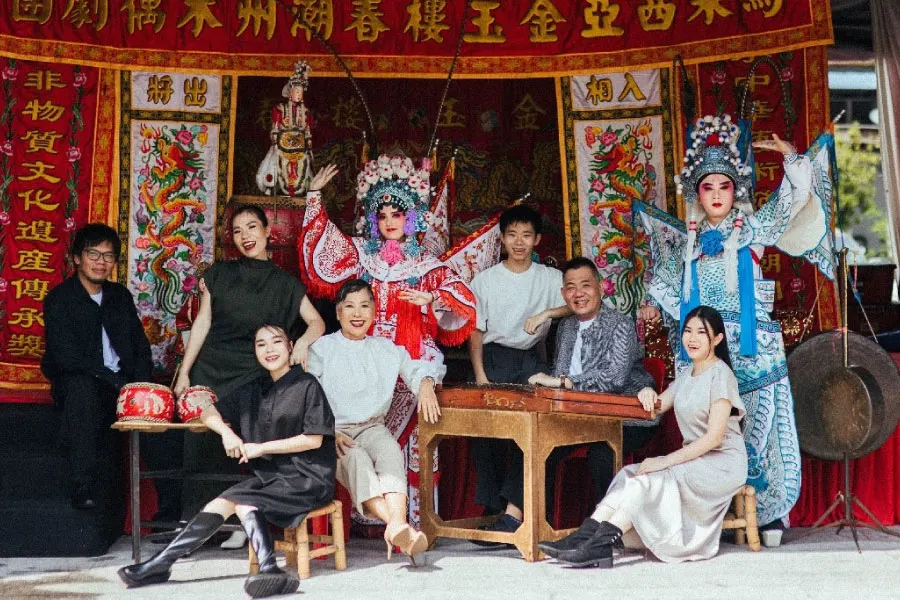
The Teochew Puppet & Opera House is a heritage institution dedicated to preserving, teaching and promoting two traditional Chinese performing arts: Teochew iron-rod puppetry and Teochew opera.
Both traditions originated in the Chaoshan region of Guangdong Province in southern China and were brought to Southeast Asia by Teochew migrants.
As Chinese communities established themselves in Penang, traditional performances became an important part of religious celebrations, community gatherings and cultural life.
Puppet shows and opera performances were particularly associated with Chinese temples and festivals, where performers entertained audiences while honouring deities and preserving traditional stories.
Over time, however, changing entertainment habits, the decline of traditional performing troupes and difficulties attracting younger practitioners threatened the survival of these art forms.
The Teochew Puppet & Opera House was established to address this challenge.
Today, it operates as a museum, performance venue, educational institution and cultural centre, providing opportunities for visitors to encounter traditions that remain part of Penang’s living heritage.
The History Behind the Teochew Puppet & Opera House
The story of the Teochew Puppet & Opera House is closely connected to a family that has preserved these performing arts across five generations.
At the centre of this legacy is Toh Ai Hwa (杜愛花), a third-generation practitioner who became a leading figure in Penang’s Teochew performing arts community.
Born in Penang in 1951, Toh developed her expertise in traditional percussion, an essential element of Teochew opera and puppet performances.
Following the death of her troupe master in 1989, she continued the performing tradition under the name Kim Giak Low Choon (金玉樓春).
Her contributions to Penang’s cultural heritage have been recognised through several honours, including the Penang Heritage Trust’s Living Heritage Treasures Award in 2008 and a Lifetime Achievement Award from George Town World Heritage Incorporated in 2020.
Her daughter, Ling Goh (吳慧玲), became the fourth-generation custodian of the family’s performing arts tradition.
Having studied at the Shantou Opera School in China, Ling developed her expertise in Teochew opera and iron-rod puppetry.
In 2014, she established the Teochew Puppet & Opera House on Armenian Street, creating a permanent space where these traditional art forms could be preserved, performed and introduced to new audiences.
Today, the family’s fifth generation has also participated in performances, continuing a remarkable cultural lineage stretching back to the 19th century.
The Historic Shophouse on Armenian Street
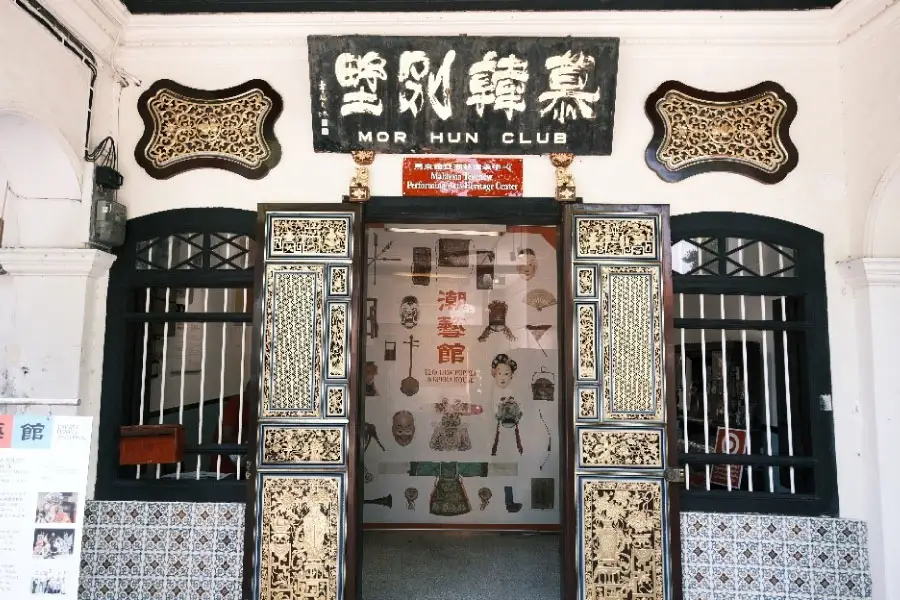
The Teochew Puppet & Opera House occupies a historic building known as Mor Hun Villa (慕韓別墅) at 122 Lebuh Armenian.
The building has its own connection to Penang’s Teochew community.
Established in the early 20th century, Mor Hun Villa served as a social and cultural gathering place for Teochew merchants and community members in northern Malaya.
In 1930, the property was acquired by prominent Teochew businessman Lim Lian Teng and subsequently made available for use as the association’s clubhouse.
Today, the building continues to serve a cultural purpose, although its role has evolved from a gathering place for merchants into an institution dedicated to preserving traditional performing arts.
Its location on Armenian Street is particularly appropriate.
The street is one of the most recognisable areas within George Town’s UNESCO World Heritage Site, known for its historic shophouses, traditional businesses, clan houses, street art and cultural attractions.
Visitors can easily combine the opera house with nearby heritage landmarks such as Cheah Kongsi, Khoo Kongsi and the Clan Jetties.
What Is Teochew Iron-Rod Puppetry?
One of the most fascinating traditions preserved at the opera house is Teochew iron-rod puppetry (潮州鐵枝木偶).
This traditional performing art developed from Chinese shadow puppetry.
Unlike flat shadow puppets, Teochew iron-rod puppets are three-dimensional wooden figures dressed in miniature costumes.
Each puppet is controlled using three iron rods.
One rod is attached to the back of the puppet to support and stabilise its body, while two additional rods control the movements of its hands.
Through carefully coordinated movements, skilled puppeteers can make the figures appear to walk, gesture, fight, dance and express emotions.
The movements require considerable practice and coordination.
Even relatively simple actions, such as turning the puppet’s head or raising its arms, involve techniques developed over generations.
Why Is Teochew Iron-Rod Puppetry Special?
Teochew iron-rod puppetry is particularly significant because it is now extremely rare in Malaysia.
According to George Town World Heritage Incorporated, Penang is the only place in Malaysia where this particular tradition continues to survive.
The puppets themselves are also remarkable works of craftsmanship.
Their carved wooden heads, painted facial expressions and intricately made costumes reflect the characters they portray.
Different figures may represent warriors, scholars, officials, noblewomen or characters from Chinese mythology and traditional literature.
The performances combine puppetry with dialogue, singing, percussion and instrumental music.
Together, these elements create a complete theatrical experience despite the relatively small size of the stage.
What Is Teochew Opera?
Teochew opera (潮劇) is a traditional form of Chinese theatre originating from the Chaoshan region of Guangdong, China.
It combines music, singing, dialogue, acting, dance and stylised movements to tell stories drawn from Chinese history, legends, mythology and classical literature.
Like other forms of Chinese opera, Teochew opera uses a highly developed system of theatrical conventions.
A character’s costume, makeup, gestures and vocal style communicate information about their identity, personality and role in the story.
The elaborate costumes are particularly distinctive.
Performers may wear embroidered robes, ornate headpieces, long sleeves and accessories that contribute to the visual storytelling.
Traditional musical instruments and percussion accompany the performance, helping establish rhythm, emotion and dramatic tension.
Teochew Opera in Penang
Teochew opera became part of Penang’s cultural landscape through Chinese migration.
Performances were traditionally staged during religious festivals, temple celebrations and community events.
One particularly important occasion is the Hungry Ghost Festival, when Chinese opera performances may be organised as offerings to deities and spirits.
These performances are not always intended solely for human audiences.
In traditional Chinese religious practice, the performance itself may form part of a ceremonial offering.
For visitors interested in the relationship between religion and performing arts, this provides an interesting connection to Penang’s wider Chinese cultural traditions.
Read our Hungry Ghost Festival in Penang guide to learn more about the customs and performances associated with this annual celebration.
Things to See and Do at the Teochew Puppet & Opera House
Despite its relatively compact size, the opera house offers several experiences that distinguish it from a conventional heritage museum.
1. Explore the Traditional Puppet Collection
The exhibition introduces visitors to the craftsmanship and techniques behind Teochew iron-rod puppetry.
Visitors can observe traditional puppets with carved heads, painted faces and miniature costumes.
The figures represent different characters and demonstrate how puppetry combines visual art, storytelling and performance.
Look closely at the details of the costumes and facial expressions, which help distinguish the personalities and social roles of individual characters.
Some of the puppets and associated materials remain part of active performing traditions rather than existing only as historical exhibits.
2. Try Operating a Traditional Puppet
One of the most enjoyable aspects of the visit is the opportunity to try manipulating an iron-rod puppet.
Visitors can experience how the puppet’s movements are controlled using the three-rod system.
Although the mechanism may initially appear straightforward, producing convincing movements requires coordination and practice.
This interactive experience helps visitors appreciate the skill involved in traditional puppetry.
It is also particularly engaging for children and families, allowing them to participate directly rather than simply observing the exhibits.
3. Discover Traditional Opera Costumes
The opera house displays traditional costumes used in Teochew opera performances.
These garments are often richly embroidered and decorated with elaborate patterns, reflecting the visual traditions of Chinese theatre.
Different costumes help identify a character’s status, personality and role.
Visitors can observe the intricate workmanship involved in producing garments designed for theatrical movement and storytelling.
Some costumes may be accompanied by traditional accessories such as headpieces, belts and props.
4. Dress in an Opera Costume for Photographs
Another distinctive experience is the opportunity to dress in an authentic opera costume and take photographs on the stage.
The activity gives visitors a closer appreciation of the weight, structure and appearance of traditional theatrical clothing.
It also creates a memorable souvenir of the visit.
Unlike ordinary costume photography attractions, the experience takes place within an institution dedicated to preserving the actual performing art.
The costume-dressing and stage photography experience is included in the standard admission ticket.
5. Discover Traditional Musical Instruments
Music plays an essential role in both Teochew opera and puppet performances.
The exhibition includes instruments associated with traditional theatrical accompaniment.
Percussion is particularly important because it establishes rhythm, signals dramatic movements and helps coordinate performers.
Different musical passages may indicate changes in mood, the arrival of a character or an important moment in the story.
Understanding the role of music helps visitors appreciate that traditional puppetry is not simply about moving wooden figures.
It is a coordinated performance involving musicians, puppeteers, singers and storytellers.
6. Learn About the Art of Opera Makeup
Traditional Teochew opera makeup is another important element of the performing arts.
Performers use distinctive colours, patterns and facial designs to communicate information about their characters.
Different styles may represent age, temperament, social position or particular theatrical roles.
Applying opera makeup requires considerable skill, especially when preparing elaborate characters.
The opera house’s educational activities help visitors understand the relationship between makeup, costume and performance.
7. Watch a Live Performance or Demonstration
For visitors who want to experience the performing arts in action, live performances are among the most memorable activities associated with the institution.
The opera house periodically organises puppet performances, demonstrations, workshops and special cultural programmes.
Watching a skilled puppeteer bring a wooden figure to life reveals techniques that are difficult to appreciate through static exhibits alone.
However, live performances are not necessarily held every day.
Visitors who specifically want to watch a performance should contact the opera house or check its social media pages before visiting.
8. Join a Workshop or Cultural Programme
Beyond its exhibition activities, the institution offers educational programmes related to traditional performing arts.
These may include:
- Teochew iron-rod puppetry classes
- Traditional opera movement and vocal training
- Percussion and music workshops
- Guided heritage tours
- Special cultural performances
- Educational and community outreach activities
Some programmes require advance arrangements or separate registration.
For travellers particularly interested in traditional arts, a workshop can provide a deeper experience than a standard museum visit.
Preserving Teochew Performing Arts for Future Generations
The Teochew Puppet & Opera House plays an important role in safeguarding Penang’s intangible cultural heritage.
Unlike physical heritage buildings, performing arts depend on people continuing to practise and transmit the necessary skills.
Traditional puppetry requires knowledge of puppet construction, manipulation, music, dialogue and storytelling.
Opera requires additional expertise in singing, movement, makeup, costume and theatrical conventions.
Without younger practitioners, these skills can gradually disappear.
The institution therefore focuses not only on presenting historical collections but also on training new performers and creating opportunities for traditional arts to evolve.
One of its contemporary initiatives is Iron Gang Puppet Theatre (鐵枝幫), which explores how traditional iron-rod puppetry can be adapted to new theatrical forms.
Productions such as IBU demonstrate how puppetry can engage with contemporary storytelling while retaining the techniques and craftsmanship of traditional performance.
This approach makes the Teochew Puppet & Opera House especially significant within George Town’s cultural landscape.
It is not simply preserving the past. It is creating opportunities for these traditions to remain relevant in the future.
Teochew Puppet & Opera House Events and Performances
The institution occasionally organises performances, cultural exchanges and programmes that bring together traditional and contemporary performing arts.
In November 2026, it organised Moved to Life: Tradition and Reinvention in Asian Puppet Theatre, an international performing arts symposium held on 7–8 November.
The programme brought together Teochew iron-rod puppeteers from China, Hong Kong, Singapore and Malaysia, alongside artists and researchers from other countries.
Activities included performances, workshops, discussions, exhibitions and public programmes at Penang Institute and Armenian Park.
The event illustrated the institution’s expanding role in connecting Penang’s traditional performing arts with international practitioners and contemporary theatre.
For upcoming performances and workshops, visitors should follow the opera house’s official announcements.
Penang Teochew Puppet & Opera House Entrance Fee
The published admission charges are:
| Visitor category | Admission |
|---|---|
| Standard adult | RM25 |
| Standard child, 12 and below | RM12 |
| Malaysian adult with MyKad | RM12 |
| Malaysian child with MyKad, 12 and below | RM6 |
| Children under 5 | Free |
Admission includes access to the exhibition gallery, the puppet manipulation experience and opera costume dressing for stage photographs.
Live performances, guided programmes and special workshops may have separate arrangements or fees.
Check the latest admission information before visiting.
Opening Hours
The Teochew Puppet & Opera House currently lists the following opening hours:
9:00 AM – 5:00 PM
Closed on Wednesdays
Special programmes, performances and private events may operate outside regular visiting hours.
Visitors planning to attend a particular activity should confirm the schedule directly with the institution.
How Long Should You Spend at the Teochew Puppet & Opera House?
Allow approximately 45 minutes to one hour for a standard visit.
This should provide enough time to explore the exhibits, examine the puppets and costumes, try the interactive activities and take photographs.
Visitors with a particular interest in Chinese opera, puppetry or traditional performing arts may wish to spend longer.
If you intend to attend a live performance or workshop, allow additional time according to the programme schedule.
Best Time to Visit
Morning is a convenient time to visit, especially if you’re planning to explore Armenian Street and the surrounding heritage district afterwards.
The opera house is an indoor attraction, making it suitable for visiting during hot weather or rainy periods.
Weekdays outside public holidays may offer a quieter experience.
However, visitors interested in live performances should prioritise the event schedule rather than simply choosing the quietest time.
Where Is the Teochew Puppet & Opera House?
The attraction is located at:
Teochew Puppet & Opera House
122 Lebuh Armenian
10200 George Town
Penang, Malaysia
The building is situated along Armenian Street, one of the most popular heritage streets within the George Town UNESCO World Heritage Site.
Its central location makes it easy to visit while exploring the surrounding neighbourhood on foot.
How to Get to the Teochew Puppet & Opera House
By Foot
Walking is the most convenient option if you’re already exploring George Town’s heritage district.
The opera house is located close to several major attractions, including Armenian Street’s murals, Cheah Kongsi and Khoo Kongsi.
Visitors staying in central George Town can often reach the attraction without needing a vehicle.
By Public Bus
Rapid Penang buses operate throughout central George Town, while the free CAT Bus serves parts of the UNESCO heritage area.
Depending on your route, you may need to walk a short distance from the nearest bus stop.
Read our Penang Public Transport Guide for information about travelling around George Town without a car.
By Grab or Taxi
Grab is a convenient option for visitors travelling from areas such as Gurney Drive, Pulau Tikus, Air Itam or elsewhere on Penang Island.
Because Armenian Street is located within the busy heritage district, drivers may drop passengers along nearby streets rather than directly in front of the attraction.
By Car
Visitors driving into George Town can use public parking facilities around the heritage district.
However, parking can be limited during weekends and holidays.
Walking is generally the most practical way to explore Armenian Street and its surrounding attractions.
Things to Do Near the Teochew Puppet & Opera House
One of the biggest advantages of visiting the opera house is its location.
Armenian Street and the surrounding neighbourhood contain some of George Town’s most interesting heritage attractions.
Armenian Street
Armenian Street is one of George Town’s most recognisable historic streets, known for its traditional shophouses, street art, cafés and cultural attractions.
The street is particularly popular among visitors exploring the UNESCO World Heritage Site on foot.
Beyond its famous murals, Armenian Street also reveals the history of the different communities that once lived and traded in the area.
The Teochew Puppet & Opera House adds an important performing arts dimension to this heritage landscape.
Cheah Kongsi
A short walk away is Cheah Kongsi, one of Penang’s oldest Chinese clan associations.
Its historic clan house features traditional architecture, decorative carvings and displays connected to the history of the Cheah community.
Visiting Cheah Kongsi alongside the Teochew Puppet & Opera House provides two different perspectives on Chinese heritage in Penang.
One focuses on clan associations and community institutions, while the other preserves traditional performing arts.
Khoo Kongsi
Khoo Kongsi is among George Town’s most impressive clan houses, famous for its elaborate architecture, decorative carvings and richly ornamented ancestral hall.
The complex reflects the wealth, organisation and cultural traditions of Chinese immigrant communities in Penang.
It is one of the essential attractions for visitors interested in Chinese heritage and architecture.
Clan Jetties
Located along Weld Quay, the Clan Jetties are traditional waterfront settlements associated with Chinese immigrant communities.
Wooden houses stand on stilts above the water, connected by narrow boardwalks.
Unlike a conventional museum, the jetties remain living residential communities.
Visitors should respect the privacy of residents while exploring the public walkways.
Pinang Peranakan Mansion
The Pinang Peranakan Mansion provides another perspective on Penang’s multicultural heritage.
The museum occupies a beautifully restored historic mansion filled with furniture, decorative objects and artefacts associated with Peranakan culture.
Its collections illustrate the distinctive traditions that developed through interactions between Chinese communities and local cultures in the region.
Penang State Museum
For a broader understanding of Penang’s history, consider visiting the Penang State Museum on Farquhar Street.
Reopened in July 2026 following extensive restoration, the museum features redesigned galleries exploring Penang’s archaeology, migration, communities and cultural development.
It is an excellent companion attraction for visitors interested in the historical context behind George Town’s living traditions.
Suggested George Town Cultural Heritage Walking Route
The Teochew Puppet & Opera House fits naturally into a walking itinerary focused on Chinese heritage and traditional culture.
Suggested route:
- Armenian Street
- Teochew Puppet & Opera House
- Cheah Kongsi
- Khoo Kongsi
- Pinang Peranakan Mansion
- Clan Jetties
Allow approximately three to four hours for a relaxed exploration, depending on how much time you spend inside each attraction.
This route offers an introduction to different aspects of Penang’s Chinese heritage, from performing arts and clan associations to architecture, community life and Peranakan traditions.
Is the Penang Teochew Puppet & Opera House Worth Visiting?
Yes, particularly for travellers interested in culture, history and experiences that go beyond conventional sightseeing.
The Teochew Puppet & Opera House offers something different from George Town’s better-known attractions.
Instead of focusing primarily on architecture or historical objects, it introduces visitors to a traditional performing art that depends on human skill, creativity and knowledge passed down across generations.
The interactive puppet experience and opera costume dressing also make the attraction engaging for families.
For visitors who have already explored Penang’s famous murals, clan houses and temples, the opera house provides an opportunity to discover another layer of the city’s cultural identity.
Its relatively compact size also makes it easy to incorporate into a wider Armenian Street itinerary.
Frequently Asked Questions
What is the Penang Teochew Puppet & Opera House?
It is a cultural heritage institution on Armenian Street dedicated to preserving and promoting Teochew iron-rod puppetry and traditional Teochew opera through exhibitions, performances, training and interactive visitor experiences.
Where is the Teochew Puppet & Opera House located?
It is located at 122 Lebuh Armenian, within the George Town UNESCO World Heritage Site in Penang.
How much is the entrance fee?
Standard admission is RM25 for adults and RM12 for children aged 12 and below. Malaysian MyKad holders receive discounted rates, while children under five enter free.
What are the opening hours?
The opera house is open from 9 AM to 5 PM and is closed on Wednesdays, according to its published visitor information.
Can visitors try operating the puppets?
Yes. The standard admission includes an interactive experience where visitors can try manipulating traditional Teochew iron-rod puppets.
Can visitors wear traditional opera costumes?
Yes. Visitors can participate in an opera costume dressing experience and take photographs on the stage as part of their admission.
Are live performances held every day?
No. Live performances and special programmes are organised periodically. Check the institution’s official social media channels for upcoming activities.
Is the attraction suitable for children?
Yes. The interactive puppet experience and costume dressing can be particularly engaging for children, although younger visitors may require assistance and supervision.
How long should I spend there?
Allow approximately 45 minutes to one hour for a standard visit. Additional time may be needed for performances, workshops or guided programmes.
Why is Teochew puppetry important in Penang?
Teochew iron-rod puppetry is a rare traditional performing art associated with Penang’s Chinese community. The Teochew Puppet & Opera House helps preserve the techniques, stories and cultural knowledge needed to keep this tradition alive.
The Penang Teochew Puppet & Opera House is one of George Town’s most meaningful cultural attractions.
Behind its modest Armenian Street entrance lies a performing arts tradition that has survived migration, changing social customs and the decline of traditional entertainment.
Through its collection of puppets, opera costumes, musical instruments and interactive experiences, the institution introduces visitors to the creativity and craftsmanship behind Teochew performing arts.
More importantly, it continues to train performers, organise cultural programmes and explore new ways of presenting these traditions to contemporary audiences.
For travellers exploring George Town’s UNESCO World Heritage Site, the opera house offers a reminder that heritage is not only about preserving historic buildings.
It is also about protecting the knowledge, skills and stories that people continue to carry from one generation to the next.
Combine your visit with Armenian Street, Cheah Kongsi, Khoo Kongsi and the Clan Jetties for a deeper exploration of Penang’s Chinese cultural heritage.