After almost a decade behind closed doors, one of George Town’s most important cultural institutions is welcoming visitors once again.
The Penang State Museum on Farquhar Street reopened to the public on 24 July 2026, following an extensive RM18 million restoration and upgrading project. The historic museum now combines its collection of Penang artefacts with redesigned galleries, digital displays and interactive technology, creating a considerably different visitor experience from the museum many Penangites remember.
For travellers who want to understand Penang beyond its famous street food and colourful heritage streets, the museum is one of the best places to begin. Its exhibitions trace the island’s development through archaeology, migration, colonial history, multicultural communities and modern Penang.
Located within the George Town UNESCO World Heritage Site, it is also within walking distance of landmarks including St George’s Church, the Esplanade, Fort Cornwallis and the Queen Victoria Memorial Clock Tower, making it easy to incorporate into a George Town heritage itinerary.
What is the Penang State Museum?
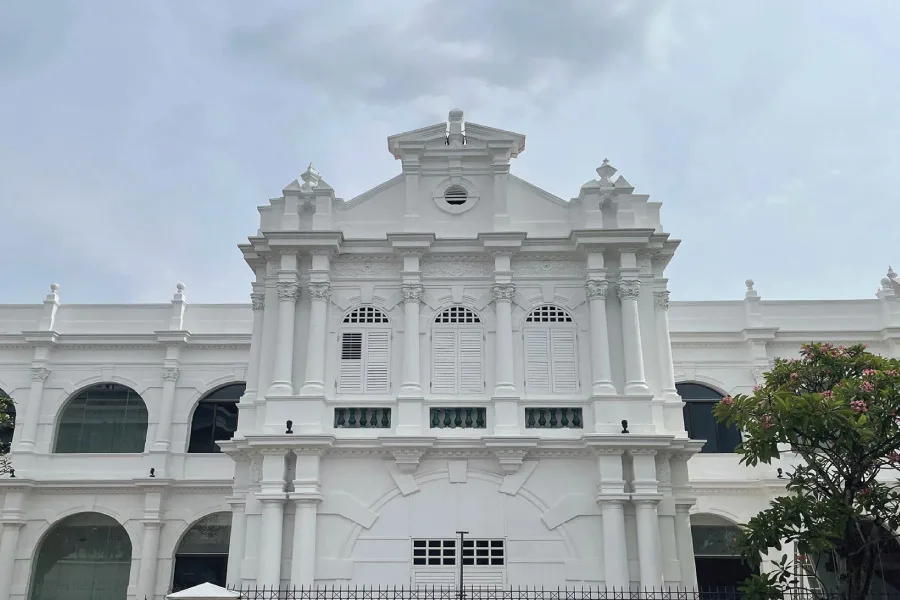
The Penang State Museum, or Muzium Negeri Pulau Pinang, is the state’s principal museum dedicated to preserving and interpreting Penang’s history, culture and heritage.
Its main museum occupies a historic building at No. 1, Lebuh Farquhar, in the heart of George Town. The institution has collected historical objects, photographs, documents, artworks and cultural artefacts that tell the stories of the communities and events that shaped Penang.
Following its 2026 reopening, the Farquhar Street museum contains 15 exhibition galleries displaying nearly 1,200 artefacts, supported by modern interpretive technology including high-definition projections, interactive kiosks, simulators and motion sensors.
For first-time visitors to Penang, it provides useful historical context before exploring the streets, temples, clan houses and colonial landmarks found throughout George Town.
Penang State Museum Reopens After Nine Years
The reopening is particularly significant because the museum had been inaccessible for almost a decade.
The Farquhar Street museum closed in April 2017 for extensive restoration and upgrading works. Because the museum occupies a Category One heritage building, conservation required specialist attention rather than conventional renovation. The project was also interrupted between 2020 and 2023 during the Covid-19 pandemic.
The RM18 million project was undertaken in two broad phases. The first focused on conserving the historic building and retaining its architectural character, while the second developed the museum’s interior and new exhibition spaces.
The official reopening ceremony took place on 23 July 2026, officiated by Penang Governor Tun Ramli Ngah Talib and attended by Chief Minister Chow Kon Yeow and State Tourism and Creative Economy Committee chairman Wong Hon Wai. The museum opened to the public the following day.
What’s New at the Reopened Penang State Museum?
Visitors who remember the old museum will find a substantially refreshed experience.
Rather than relying solely on artefacts displayed inside traditional glass cabinets, the revamped museum incorporates technology to help visitors interact with Penang’s history.
New features include:
- 15 exhibition spaces
- Nearly 1,200 artefacts
- High-definition projection systems
- Interactive digital kiosks
- Simulators
- Motion sensors
- Augmented-reality and digital elements
- Improved interpretation of Penang’s history and communities
Photography, which was previously restricted inside the museum, is also now permitted, making the galleries considerably more accessible to contemporary visitors and younger audiences.
The intention is not to replace the museum’s historical collection with technology, but to use digital tools to make the stories surrounding those objects easier to understand.
A Brief History of the Penang State Museum Building
The museum itself is part of the story.
Long before it became a museum, the Farquhar Street building was associated with education in Penang.
Parts of the historic complex were used by Penang Free School, one of the oldest English-medium schools in Southeast Asia, before the school relocated to its present premises on Green Lane in 1927. Hutchings School subsequently occupied the site.
The building suffered significant damage during the Second World War, when one of its wings was destroyed by bombing.
Rather than completely concealing this chapter during the latest restoration, the foundations of the bomb-damaged section have been retained and incorporated into the visitor experience near the museum entrance.
The surviving building was eventually repurposed as the Penang State Museum, which opened in 1965 and became one of the state’s principal institutions for preserving its cultural and historical collections.
Today, therefore, visiting the museum means exploring not only the objects inside it but also a heritage building that has witnessed more than a century of George Town’s changing history.
What to See Inside the Penang State Museum
Penang’s Early History and Archaeology
The museum’s story begins long before the establishment of colonial George Town.
Its collections introduce visitors to Penang’s prehistoric past and archaeological discoveries, including material associated with Gua Kepah, an important archaeological site on mainland Penang.
This section provides valuable context for understanding that Penang’s history did not begin with the arrival of Europeans in the 18th century.
The Development of George Town
Another important part of the museum explores the transformation of Penang into a major trading centre.
George Town’s position along the Strait of Malacca attracted merchants, labourers and migrants from across Asia and beyond. Over generations, these communities created the multicultural city visitors encounter today.
After exploring this history inside the museum, you can see many of these layers for yourself by walking through Little India, visiting the historic Clan Jetties, or exploring George Town’s traditional clan houses such as Cheah Kongsi and Khoo Kongsi.
Penang’s Multicultural Communities
One of Penang’s defining characteristics has always been its cultural diversity.
The museum documents the traditions and experiences of the different communities that contributed to the state’s development, helping visitors understand how Malay, Chinese, Indian, Peranakan, Eurasian and other influences became intertwined.
This makes the museum an especially useful introduction before exploring George Town’s religious and cultural landmarks, including the temples, churches and mosques along the city’s famous Street of Harmony.
Colonial Penang
The establishment and development of British-controlled Penang forms another major chapter of the galleries.
Rather than treating the colonial period as an isolated story, the exhibitions place it within the wider development of the port, its communities and the institutions that shaped modern Penang.
Visitors interested in this period can continue exploring nearby at Fort Cornwallis, the Esplanade, City Hall and the Queen Victoria Memorial Clock Tower.
The Francis Light Letters
One particularly interesting addition following the reopening is the display of replicas of two historic documents associated with Captain Francis Light.
One is Light’s 1791 letter to the Sultan of Kedah concerning the occupation treaty for Penang, while the other is his last will and testament addressed to Martina Rozells and their son William. The replicas are being exhibited at the museum for the first time.
They form part of the wider Light Letters collection, which contains approximately 1,200 manuscripts written between 1768 and 1794 involving Malay rulers and dignitaries, traders and other figures from around the Malay Archipelago.
For visitors interested in Penang’s early colonial history, these documents add an interesting primary-source dimension to the museum experience.
Penang Before and After Independence
The galleries continue beyond colonial George Town to examine Penang’s evolution before and after Malaysian independence.
This broader chronological approach helps connect the heritage buildings visitors encounter around George Town with the modern state Penang has become today.
The Museum’s Remarkable Reopening Response
The newly reopened museum has already attracted considerable attention.
In just 29 days following its public reopening, more than 47,600 people visited the museum, surpassing its original target of 30,000 visitors for the remainder of 2026. On 9 August alone, attendance reached approximately 3,750 visitors.
Part of that surge was undoubtedly encouraged by free admission during the reopening period, but the figures also demonstrate strong interest among Penangites in revisiting a museum that had been inaccessible for nearly a decade.
The museum offered free entry from 24 July through 31 August 2026.
Penang State Museum Entrance Fee
From 1 September 2026, the announced admission charges are:
| Visitor | Admission |
|---|---|
| Malaysian adult / MyKad holder | RM5 |
| Malaysian child aged 5–12 | RM3 |
| Malaysian senior citizen | RM3 |
| Malaysian person with disabilities | RM3 |
| Non-Malaysian adult | RM25 |
| Non-Malaysian child | RM10 |
| Non-Malaysian senior citizen | RM10 |
| Non-Malaysian person with disabilities | RM10 |
| Children under 5 | Free |
The state has also announced free admission on 15 and 16 September 2026 in conjunction with Malaysia Day and the anniversary of Penang Hill’s recognition as a UNESCO Biosphere Reserve.
Admission policies can change, so check with the museum before visiting.
Penang State Museum Opening Hours
The Farquhar Street museum currently operates:
Opening hours: 9:00 AM – 5:00 PM
Open: Saturday to Thursday
Closed: Friday and selected public holidays
The museum’s official website specifically lists closures for Hari Raya Aidilfitri, Hari Raya Aidiladha and Chinese New Year.
Check the latest opening information at the Penang State Museum’s official website
How Long Should You Spend at the Penang State Museum?
Allow approximately 1.5 to 2 hours for a comfortable visit.
Visitors who mainly want an overview of Penang’s history may be able to complete the galleries more quickly, while history enthusiasts can easily spend longer examining the artefacts, documents and multimedia displays.
Because the museum is located among many of George Town’s historic attractions, it also works particularly well as the starting point for a half-day heritage walk.
Best Time to Visit
Morning is probably the best time to visit, particularly if you intend to explore George Town afterwards.
Arriving around 9:00 or 10:00 AM allows you to enjoy the air-conditioned museum before spending the later morning walking around the surrounding heritage district.
Weekdays are likely to offer a quieter experience than weekends, particularly while interest in the newly reopened museum remains high.
The museum is also one of the better rainy-day activities in Penang, giving visitors an indoor alternative when tropical downpours make walking around George Town less appealing.
Where is the Penang State Museum?
The museum is located at:
Penang State Museum
No. 1, Lebuh Farquhar
10450 George Town
Penang
Its location places it within the core of the George Town UNESCO World Heritage Site and within easy walking distance of several major landmarks.
How to Get to the Penang State Museum
By Foot
Walking is the easiest option if you’re staying within central George Town.
The museum is close to Light Street and Jalan Masjid Kapitan Keling, allowing it to be incorporated naturally into a heritage walking route.
By Bus
Several Rapid Penang services operate through central George Town. Visitors relying on buses can refer to our Penang Public Transport Guide for a broader explanation of getting around the island.
The free CAT Bus around central George Town can also be useful when exploring the heritage zone.
By Grab
Grab is convenient if you’re travelling from areas such as Gurney Drive, Pulau Tikus, Air Itam or elsewhere on the island.
Things to Do Near Penang State Museum
One of the museum’s biggest advantages is its location. You can easily combine it with several important George Town attractions.
St George’s Church
Located almost opposite the museum area, St George’s Church is the oldest purpose-built Anglican church in Southeast Asia and one of George Town’s most recognisable colonial landmarks.
From here, you can continue along the Street of Harmony, where some of Penang’s most important places of worship stand within walking distance of one another.
Goddess of Mercy Temple
Continue towards Jalan Masjid Kapitan Keling to reach the historic Goddess of Mercy Temple, one of George Town’s oldest Chinese temples and an important religious centre for the local Chinese community.
Little India
A short walk brings you into Penang’s Little India, where spice shops, sari stores, Hindu temples, Indian restaurants and traditional businesses create one of George Town’s most colourful neighbourhoods.
Penang City Hall and Town Hall
Walk towards the waterfront and you’ll encounter the magnificent Penang City Hall and neighbouring Town Hall facing Padang Kota Lama.
These civic buildings provide another perspective on George Town’s colonial-era development.
Fort Cornwallis
Continue around the Esplanade to Fort Cornwallis, one of Penang’s most historically significant landmarks. The fort itself also recently underwent major conservation work, making 2026 an especially interesting year for exploring George Town’s restored heritage sites.
Queen Victoria Memorial Clock Tower
Standing close to Fort Cornwallis, the Queen Victoria Memorial Clock Tower commemorates Queen Victoria’s Diamond Jubilee and is one of the most recognisable structures along George Town’s historic waterfront.
Penang State Museum at Farquhar Street vs Macalister Road
Visitors should be aware that the Penang State Museum operates across more than one location.
The newly reopened historic museum at Farquhar Street serves as the principal heritage museum. Meanwhile, another museum facility at 57 Jalan Macalister is being developed to accommodate exhibitions and objects that cannot fit within the relatively compact two-storey Farquhar Street building.
As of late August 2026, the state has indicated that the Macalister Road museum branch is expected to open in September 2026.
This expansion means the Penang State Museum should increasingly be understood as a network of cultural spaces rather than a single building.
The museum board also operates the Automotive Gallery at Jalan Macalister and the Penang State Art Gallery at Dewan Sri Pinang.
Is the Penang State Museum Worth Visiting?
Yes—particularly after its 2026 restoration.
For first-time visitors, the museum provides context that makes the rest of George Town easier to understand. Instead of seeing clan houses, colonial buildings, temples and historic neighbourhoods simply as individual tourist attractions, you begin to see how migration, trade, colonialism and different communities collectively shaped Penang.
For Penangites who visited the museum years ago, the extensive renovation, redesigned galleries and digital elements provide a good reason to return.
Frequently Asked Questions
Is Penang State Museum open again?
Yes. The historic Penang State Museum on Farquhar Street officially reopened on 23 July 2026 and welcomed the public from 24 July 2026, following approximately nine years of closure for restoration and upgrading works.
Why was Penang State Museum closed?
The museum closed in 2017 for extensive conservation and restoration work on its Category One heritage building, followed by interior upgrading and exhibition development. The project was also interrupted by the Covid-19 pandemic.
How much did the Penang State Museum renovation cost?
The restoration and upgrading project cost approximately RM18 million.
What can you see at Penang State Museum?
The reopened museum features 15 exhibition spaces containing nearly 1,200 artefacts covering Penang’s archaeology, history, communities, culture and development, accompanied by interactive and digital elements.
How long should I spend there?
Allow approximately 1.5 to 2 hours for a comfortable visit, although history enthusiasts may want to spend longer.
Is Penang State Museum suitable for children?
Yes. The addition of interactive kiosks, projections, simulators, motion sensors and other digital features makes the renovated museum considerably more engaging for younger visitors than a purely object-based museum experience.
Can you take photos inside Penang State Museum?
Yes. Following the reopening, visitors are permitted to photograph the museum and its displays, although you should follow any restrictions indicated for individual objects or exhibitions.
The reopening of the Penang State Museum is more than the return of another tourist attraction. After almost a decade of restoration, George Town has regained one of its most important institutions for understanding the island’s past.
The museum’s nearly 1,200 artefacts and 15 galleries provide an introduction to Penang that stretches from archaeology and early settlement through migration, colonialism, multicultural communities and the development of the modern state. The addition of interactive and digital elements makes those stories more accessible without diminishing the significance of the historic objects themselves.
Its timing is particularly significant. Together with the restoration of nearby Fort Cornwallis, the reopening gives visitors new reasons to explore George Town’s historic civic precinct rather than simply passing through it.
For first-time visitors, I would place the Penang State Museum near the beginning of a George Town itinerary. Spend an hour or two understanding the stories inside, then walk outside and explore Little India, the Street of Harmony, the Esplanade, Fort Cornwallis, Queen Victoria Memorial Clock Tower, Cheah Kongsi and the Clan Jetties.
The streets make considerably more sense once you know the stories behind them.