Official name: Lebuh Armenian
English name: Armenian Street
Tamil name: ஆர்மேனியன் வீதி Ārmēṉiyaṉ Vīti
Hokkien name: 拍銅街 Phah-tâng-ke (West of Cannon Street), 本頭公巷 Pún-thâu-kong-hāng / 建元街 Kiàn-guân-ke (East of Cannon Street)
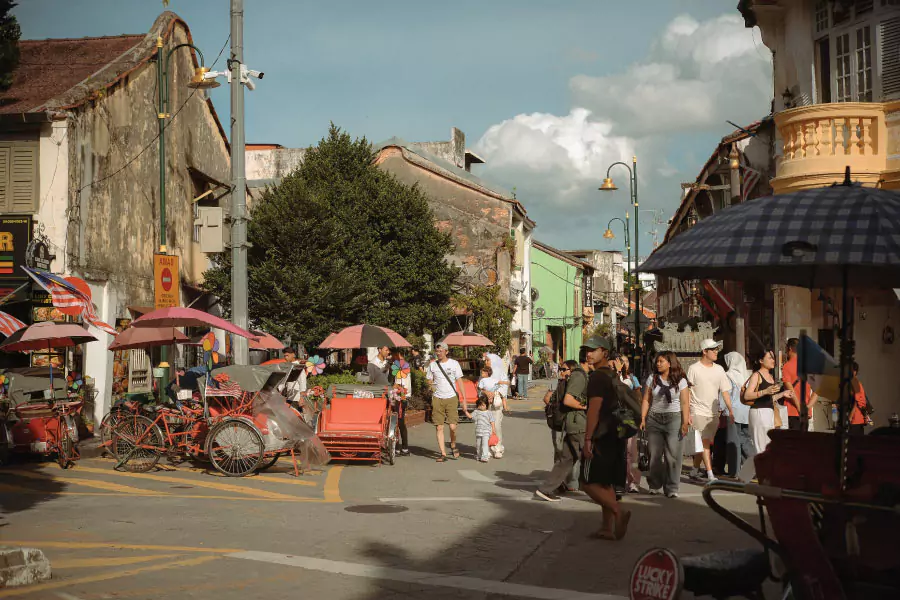
Armenian Street — locally known as Lebuh Armenian — is one of the most iconic streets in George Town. Located within the George Town UNESCO World Heritage Site, this historic street is where Penang’s past and present meet — from centuries-old shophouses and clan heritage to world-famous murals and modern cafés.
Whether you’re visiting for the first time or returning to explore deeper, Armenian Street is a place that tells multiple stories at once — cultural, artistic, and everyday local life.
Where Is Armenian Street?
Armenian Street sits right in the heart of George Town’s heritage core, within walking distance of major attractions and cultural landmarks.
It connects closely with:
- Cannon Street
- Acheen Street
- Beach Street
Most visitors will encounter it while exploring the George Town travel guide or following a Penang 1-day itinerary.
The Story Behind Armenian Street
Armenian Street — or Lebuh Armenian — is one of the most historically layered streets in George Town. While today it is known for murals and cafés, its story goes back over two centuries, shaped by waves of communities, trades, and cultural shifts.
From Malay Settlement to Armenian Influence
Before it became Armenian Street, the area was originally known as Malay Lane, named after an early Malay settlement that once existed here. This reflects George Town’s earliest phase as a multicultural port town, where different communities settled close to one another.
In 1808, the street was renamed Armenian Street following the arrival of Armenian traders who were active in regional commerce. By 1822, an Armenian Orthodox Church had been established along the street, further cementing the community’s presence.
However, the Armenian population in Penang remained relatively small. Over time, many left the island, and by the time the church was demolished in 1937, their presence had largely faded — leaving behind only the street name as a reminder of their early influence.
Rise of Chinese Clan Houses & Secret Societies
By the mid-19th century, Armenian Street had transformed again — this time becoming a stronghold of the Chinese community.
Wealthy Straits Chinese families and clan associations began establishing themselves here, building clan houses and community spaces that still stand today. Among the most notable nearby is the Khoo Kongsi, a symbol of Chinese heritage and craftsmanship in George Town.
During this period, Armenian Street and its surrounding areas were also closely linked to Chinese secret societies, including:
- Kien Tek Kongsi
- Red Flag Society
- White Flag Society
These organisations played complex roles in early Penang society — from community protection to territorial conflicts — adding another layer to the street’s historical significance.
A Street of Trades: Coppersmiths & Craftsmanship
Armenian Street was not only residential and cultural — it was also a place of trade and craftsmanship.
In its early days, the area was known for Malay braziers (metalworkers) who produced copper and brass items. This gave rise to one of the street’s historic names:
- 打铜仔街 (Pak Thang-a Kay / Ta Thung Kai)
Meaning “Coppersmith Street”, referring to the section between Pitt Street and Acheen Street
Over time, different sections of Armenian Street became known by different names, reflecting the communities and activities within them:
- 建元街 (Kien Goan Kay)
Meaning “Street of the Kien Teik clan” - 本头公巷 (Pun Thau Kong Hang / Tai Pak Kung Hong)
Meaning “Tua Pek Kong God’s Alley”, referring to religious and community spaces
These names highlight how Armenian Street was never just one identity — but a collection of overlapping cultural zones.
Armenian Street Today: Where History Meets Creativity
Today, Armenian Street has evolved into one of the most visited streets within the George Town UNESCO World Heritage Site — not just for its history, but for how that history blends with modern creativity.
It is now home to:
- Iconic street art, including the famous “Children on a Bicycle” mural
- Preserved shophouses and heritage buildings
- Museums, galleries, and cultural spaces
- Shops selling antiques, crafts, and souvenirs
Despite its transformation, the essence of Armenian Street remains the same — a place shaped by different people, cultures, and stories across time — offering a glimpse into Penang’s multicultural identity, something deeply explored in the George Town UNESCO heritage guide.
Things to Do on Armenian Street
1. Discover George Town’s Famous Street Art
Armenian Street is globally recognised for its street art, largely popularised by Lithuanian artist Ernest Zacharevic. What makes these murals special is how they blend painted elements with real-life objects — turning walls, bicycles, and motorcycles into interactive art pieces.
The most iconic piece, Children on a Bicycle, has become a symbol of Penang itself. But beyond the famous murals, the surrounding streets are filled with smaller, lesser-known artworks waiting to be discovered.
What to look out for:
- Children on a Bicycle — the most photographed mural
- Boy on a Motorcycle nearby
- Interactive installations combining props and paintings
- Hidden artworks along side streets and alleys
Tip: Explore beyond Armenian Street into nearby lanes for a more complete street art experience — also covered in the George Town walking guide.
2. Visit Clan Houses and Cultural Landmarks
Armenian Street and its surrounding area are rich in cultural landmarks that reflect Penang’s diverse communities — from Chinese clan houses to religious sites and historic residences.
Within and around Armenian Street, you’ll find:
- Sun Yat Sen Museum — once a base for revolutionary activities led by Sun Yat Sen
- Yap Kongsi — representing early Chinese clan presence
- Poh Hock Seah Tua Pek Kong Temple — an important religious and community site
- Syed Alatas Mansion — a reminder of Arab influence in Penang
Nearby highlights include:
- Khoo Kongsi
- Cheah Kongsi
Why it’s worth exploring:
- Deep insight into Penang’s multicultural history
- Unique architecture and craftsmanship
- Stories of migration, trade, and community building
These landmarks are also featured in the George Town UNESCO heritage guide.
3. Browse Local Boutiques & Souvenir Shops
Armenian Street is lined with small boutiques and independent shops that reflect the creative and cultural spirit of George Town. Unlike typical commercial shopping areas, the shops here often focus on craftsmanship, heritage, and locally inspired products.
You’ll find a mix of:
- Handmade crafts and souvenirs
- Batik textiles and traditional clothing
- Antique items and collectibles
- Locally designed lifestyle products
Many of these shops are housed in restored heritage shophouses, making the shopping experience itself part of the attraction.
What makes it special:
- Unique, non-mass-produced items
- Cultural and artistic influences in design
- Opportunities to support local artisans
For more ideas on what to bring home, explore the Malaysian souvenirs guide.
4. Café Hopping Along Armenian Street
Over the years, Armenian Street has evolved into a creative hub, attracting cafés that blend heritage architecture with modern concepts. Café hopping here isn’t just about food — it’s about experiencing how old spaces have been reimagined.
From minimalist coffee spots to cosy dessert cafés, the street offers a variety of places to take a break while exploring.
What to expect:
- Specialty coffee and handcrafted drinks
- Desserts, cakes, and light meals
- Stylish interiors within heritage buildings
- A mix of local and international café concepts
Many cafés are located just off the main street — worth exploring side lanes for hidden gems.
You can also explore more options in the Penang food guide or nearby street food in Penang for a wider range of local flavours.
Best Time to Visit Armenian Street
- Morning (8am – 10am): Quiet, best for photography
- Late afternoon: Cooler, more vibrant atmosphere
- Midday: Can be hot and crowded
How to Explore Armenian Street
The best way to experience Armenian Street is on foot.
You can easily combine it with nearby areas such as:
It’s also part of most George Town walking routes.
Tips for Visiting
- Wear light clothing and comfortable shoes
- Stay hydrated — Penang’s heat is intense
- Respect heritage buildings and local communities
- Visit early for the best experience
- Combine nearby attractions for a fuller itinerary
FAQ
Is Armenian Street worth visiting?
Yes — it’s one of the most iconic and culturally rich streets in Penang.
How long should I spend here?
1–2 hours, or longer if visiting museums and cafés.
Is Armenian Street free to visit?
Yes, though museums may charge entrance fees.
What is Armenian Street known for?
Street art, heritage buildings, and cultural experiences.