On Lebuh Gereja, a green mansion holds wedding garments, beaded slippers and porcelain once brought out for special occasions. A few streets away, trays of Nyonya kuih tell another part of the same story. Both are ways into Penang’s Peranakan culture, a heritage shaped over generations by Chinese families who put down roots in the region and adapted to life in a Malay-speaking, multicultural port.
In Penang, the Chinese Peranakan community is commonly known as Baba Nyonya. Its local character comes through in the Hokkien traditionally spoken at home, the embroidered kebaya worn with a batik sarong, and dishes such as nasi ulam and assam prawns. George Town is a good place to see how these traditions connect, from the rooms of a heritage mansion to the dishes served at lunch.
Who Are the Peranakans in Penang?
Peranakan comes from Malay and broadly refers to locally born descendants. In George Town, Chinese Peranakanrefers to a Straits-born community of Chinese ancestry whose customs developed through generations of life in Southeast Asia. Men are traditionally called Babas and women Nyonyas. The broader term also appears in the name Jawi Peranakan, a distinct Muslim community with its own history in Penang.
How Baba Nyonya Culture Developed in Penang
George Town grew as a trading port where people from southern China, the Malay Archipelago, the Indian subcontinent and beyond settled and did business. For locally born Chinese families, that everyday contact shaped what people wore, how they cooked and the languages they used. Chinese family rites and ancestral customs continued alongside locally adapted dress, food and household traditions.
The Straits Settlements linked Penang, Melaka and Singapore under British administration. All three became associated with Baba Nyonya heritage, and each developed its own practices. Even in a single city, families could differ in how they spoke, cooked or observed an occasion. That variation is part of what makes a family recipe or a set of wedding clothes worth looking at closely.
What Makes Penang’s Baba Nyonya Culture Distinctive?
Penang Hokkien and the Language of Home
One of the clearest differences between Penang and Melaka is language. Penang’s Chinese Peranakan families traditionally spoke a local form of Hokkien with Malay loanwords. In Melaka, many Baba Nyonya families traditionally spoke Baba Malay, a Malay-based variety with Hokkien influences. The difference gives some idea of how communities with a shared heritage adapted to different places. Hokkien is also spoken across Penang’s wider Chinese community.
The Nyonya Kebaya, Batik Sarong and Beaded Slippers
A traditional Nyonya ensemble pairs an embroidered, front-opening kebaya with a batik sarong. A set of brooches called kerongsang can fasten the blouse. The shoes, known as kasut manik, are decorated with tiny beads that form patterns across the uppers. Look closely at the embroidery along the collar and hem, then at how the colours of the blouse, sarong and shoes work together.
In 2024, UNESCO inscribed the knowledge, skills, traditions and practices associated with the kebaya on its Representative List of the Intangible Cultural Heritage of Humanity. Malaysia jointly nominated it with Brunei Darussalam, Indonesia, Singapore and Thailand, reflecting how widely the garment is made and worn across Southeast Asia.
Weddings, Family Rituals and the Objects That Go With Them
A traditional Peranakan wedding involved a sequence of ceremonies across several days. Hair-combing marked a transition for the bride and groom, while serving tea gave the couple a formal way to pay respects to their elders. Historical celebrations could be elaborate, with ceremonial clothing, jewellery, dowry trays and furnishings prepared for the occasion. Some families today incorporate selected customs into shorter celebrations.
At the Pinang Peranakan Mansion, the wedding chamber brings those details together in one room. Look at the bed, textiles and accessories alongside the clothes. A garment display shows the skill of the embroidery, while the furnished room helps you see the occasion for which the garment was made.
Penang Nyonya Food and What to Order
Penang Nyonya cooking draws on Chinese, Malay, Thai and other regional influences. Its character comes through in the way a meal balances sour, spicy, sweet and savoury flavours. Order a few dishes to share so you can taste the difference between a plate of rice scented with fresh herbs, a rich spice-paste curry and a tangy prawn dish.
| Dish | What to expect |
|---|---|
| Nasi ulam | Rice tossed with finely sliced herbs. The fragrance and texture depend on the herbs and other ingredients each cook chooses. |
| Kapitan chicken curry | Chicken cooked in a fragrant spice paste, often with coconut milk. Order rice to go with the sauce. |
| Assam prawns | Prawns prepared with tamarind, prized for the sweet-sour flavour that clings to the shells. |
| Pie tee | Crisp little pastry cups filled with finely cut vegetables, often including jicama. Eat them soon after filling, while the shells are still crisp. |
| Nyonya kuih | Small sweets and cakes made in a range of textures. Try a slice of layered kuih lapis or a coconut-filled kuih ketayap. |
These dishes are a starting point for exploring Penang’s Nyonya cooking, and recipes vary by household and restaurant.
Where to Try Nyonya Food in George Town
- Auntie Gaik Lean’s Old School Eatery, Lebuh Bishop. Start here if you want a sit-down meal built around several Nyonya dishes. It works particularly well in a group, when you can share a curry, a vegetable dish and rice.
- Moh Teng Pheow Nyonya Koay & Canteen, off Lebuh Chulia. Come for a kuih stop. If you’re unfamiliar with Nyonya kuih, choose a few pieces with different textures so you can compare steamed layers, soft rice cakes and coconut fillings.
- Kebaya Dining Room, Seven Terraces. This heritage-hotel restaurant serves a more contemporary interpretation of Peranakan cooking, drawing on wider regional influences. It suits a longer dinner after a day in the heritage quarter.
Where to Experience Peranakan Culture in Penang
1. Start at the Pinang Peranakan Mansion
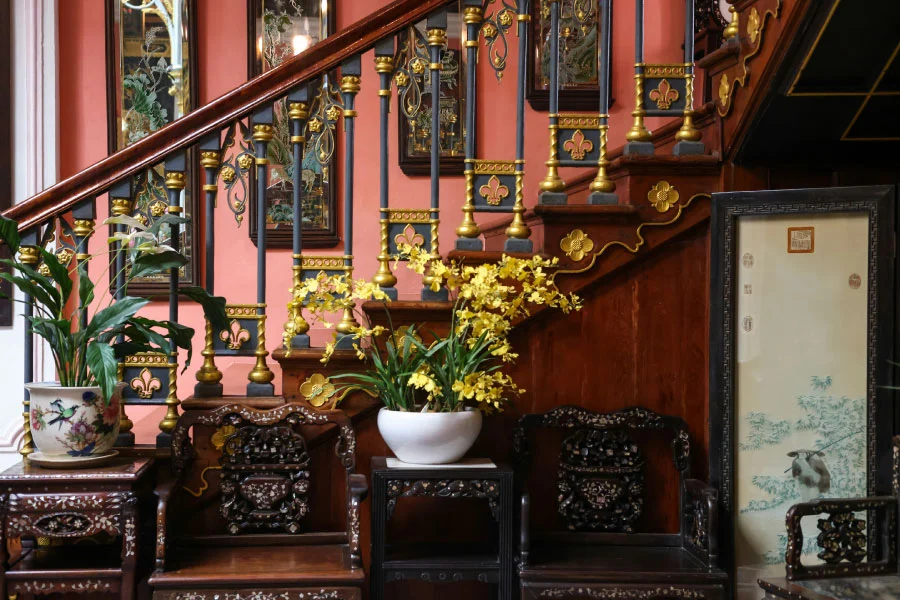
The Pinang Peranakan Mansion at 29 Lebuh Gereja (Church Street) is the most direct introduction for first-time visitors. The late-19th-century property was associated with Chung Keng Quee, a wealthy mining magnate and Chinese community leader. Today, the restored building houses a collection assembled to interpret Straits Chinese life. Its furnished rooms present a particularly affluent view of that world.
Take time with the smaller objects. Porcelain, jewellery and beaded shoes give a sense of what people used and wore for different occasions. The carved woodwork, imported floor tiles and ironwork show how materials and design travelled through a port city. For visitor information and more on the building, see our Pinang Peranakan Mansion guide.
2. Walk from Church Street to Armenian Street
From Lebuh Gereja, continue through Penang’s Little India towards Armenian Street. The walk puts Peranakan history in the context of the wider trading town. On Armenian Street, look up from the murals to see the shuttered upper floors and narrow shophouse fronts. The street is also home to Cheah Kongsi, where you can learn about the clan associations that helped organise Chinese community life in George Town.
3. Explore Penang’s Jawi Peranakan Heritage
The Jawi Peranakan community developed through ties between South Asian Muslim settlers and local Malay communities. In George Town, its history is closely connected to the Muslim trading neighbourhood around Acheen Street. A walk along Lebuh Aceh offers a starting point, while Jawi House on Armenian Street serves food inspired by the community’s culinary traditions. It makes a good second stop if you want to see how the word Peranakan applies to more than one community in Penang.
A Half-Day Peranakan Heritage Walk in George Town
Set aside a morning and lunch. The route stays within the old town, so you can follow it on foot and spend more time at whichever stop interests you most.
| When | Where to go | What to look for |
|---|---|---|
| Morning | Pinang Peranakan Mansion, Lebuh Gereja | Start with the wedding chamber, clothing and household objects. |
| Late morning | Little India, Armenian Street and Cheah Kongsi | Compare the mansion with the shophouses and clan buildings around it. |
| Lunch | A Nyonya restaurant in the heritage quarter | Share a curry, an assam dish and a herb or vegetable dish. |
| After lunch | Moh Teng Pheow, off Lebuh Chulia | Pick a few pieces of kuih to share or take away. |
If you have the rest of the day free, use our George Town travel guide to continue exploring the heritage quarter.
Frequently Asked Questions
What is Peranakan culture in Penang?
Penang Peranakan culture commonly refers to the heritage of the island’s Baba Nyonya, or Chinese Peranakan, community. It developed over generations through Chinese family traditions and local cultural exchange. In George Town, you can explore it through Nyonya food, traditional dress, family ceremonies and museum collections.
What is the difference between Penang and Melaka Peranakan culture?
Language is a useful starting point. Penang’s Chinese Peranakan families traditionally spoke Hokkien with Malay loanwords, while Baba Malay was more closely associated with Melaka’s Baba Nyonya community. Penang’s Nyonya cooking is also known for its aromatic herbs, sour flavours and regional influences, including Thai influences.
Where is the Peranakan museum in Penang?
The Pinang Peranakan Mansion is at 29 Church Street (Lebuh Gereja) in George Town. The museum displays antiques, furniture, traditional clothing, jewellery and objects associated with Baba Nyonya domestic and ceremonial life.
What Nyonya dishes should I try on my first visit?
Order nasi ulam, Kapitan chicken curry and assam prawns for a meal with three distinct flavours. If you’re looking for a snack, try pie tee or start with a few varieties of Nyonya kuih.
Is Peranakan culture still practised in Penang?
Yes. In George Town, it continues through community groups, family cooking, traditional dress and customs that people adapt for present-day celebrations. The Penang Chinese Peranakan Association also took part in the consultation process for the multinational kebaya nomination.