Penang is known for its coastal views, heritage streets and green hills, but during a haze episode, the island can look noticeably different. The skyline becomes obscured, visibility falls, the air may smell smoky, and outdoor activities become less comfortable—particularly for children, older adults and people with respiratory conditions.
Haze returned to Penang several times in August 2026, with parts of the state recording unhealthy Air Pollutant Index readings. Conditions can change quickly depending on wind direction, rainfall, local emissions and the movement of smoke from regional forest and peatland fires.
If you are living in or travelling to Penang during the haze, this guide explains how to check the latest API reading, what each level means, how haze may affect your health and what precautions you should take.
Latest update: Air quality can vary between different parts of Penang and change throughout the day. Check the official Department of Environment’s APIMS portal for the most recent readings before planning outdoor activities.
Is Penang Experiencing Haze Now?
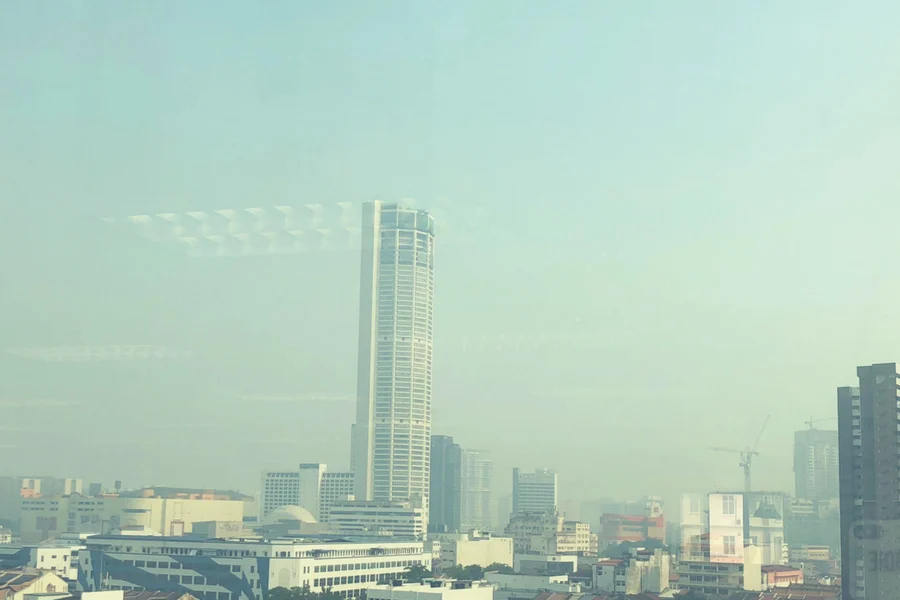
Penang experienced several periods of deteriorating air quality in August 2026. On 25 August, three of the state’s four monitoring stations recorded unhealthy API readings, including Minden and Balik Pulau on Penang Island and Seberang Perai on the mainland.
Rain temporarily improved conditions, but haze can return when the weather becomes dry or prevailing winds carry smoke into northern Peninsular Malaysia. For this reason, you should not judge air quality only by looking at the sky.
Visibility, smell and the colour of the skyline may offer clues, but the official API reading provides a much more reliable indication of current conditions.
Where to Check Penang’s Current API Reading
Malaysia’s official air-quality data is published through the Department of Environment’s Air Pollutant Index Management System, commonly known as APIMS.
Penang’s air-quality monitoring locations generally include:
- Minden
- Balik Pulau
- Seberang Jaya
- Seberang Perai
The closest station may provide the most relevant indication of conditions in your area, although readings can still vary within the same district.
For example, Minden is generally more relevant to George Town and the eastern side of Penang Island, while Balik Pulau represents conditions on the western side. Seberang Jaya and Seberang Perai cover parts of mainland Penang.
Because readings are updated regularly, always check APIMS immediately before exercising, sightseeing or organising an outdoor event.
Penang Air Pollutant Index Levels Explained
Malaysia uses the Air Pollutant Index, or API—known as Indeks Pencemaran Udara in Bahasa Malaysia—to communicate current air quality and its potential effect on health.
| API reading | Air-quality category | General meaning |
|---|---|---|
| 0–50 | Good | Air quality is generally considered healthy |
| 51–100 | Moderate | Usually acceptable, although unusually sensitive people may experience symptoms |
| 101–200 | Unhealthy | Outdoor exposure should be reduced, especially by higher-risk groups |
| 201–300 | Very unhealthy | Everyone should limit outdoor exertion and follow official advice |
| 301–500 | Hazardous | Serious health risk; remain indoors and follow emergency instructions |
| Above 500 | Emergency | Extremely dangerous pollution requiring emergency measures |
An API reading in the moderate range does not necessarily mean everyone must stay indoors. However, people who are particularly sensitive to air pollution should pay attention to symptoms and avoid lengthy or strenuous outdoor activities.
Once readings exceed 100, the air is classified as unhealthy. Even healthy individuals should consider shortening outdoor activities, while vulnerable groups should minimise exposure.
What Causes the Haze in Penang?
Haze in Penang can result from a combination of regional and local factors rather than a single source.
Transboundary Smoke
Major haze episodes in Malaysia are frequently associated with smoke from forest and peatland fires elsewhere in Southeast Asia. Depending on the location of the fires and the prevailing winds, smoke can travel long distances across national borders.
Penang’s location on the northwestern coast of Peninsular Malaysia means its air quality can be affected when regional winds carry smoke towards the northern states.
The Southwest Monsoon
Malaysia’s Southwest Monsoon generally occurs from late May until September. This period tends to be relatively dry, allowing smoke and airborne particles to remain in the atmosphere for longer.
Changes in wind direction can either bring haze towards Penang or push it away. This is why conditions may improve for a few days before deteriorating again.
Dry Weather and Limited Rainfall
Rain can temporarily remove some airborne particles and improve visibility. Conversely, prolonged dry weather allows pollutants to accumulate, particularly when there is little wind to disperse them.
A short rainstorm may provide relief, but it does not always mean the haze episode has ended.
Local Air Pollution
Vehicles, industrial activity, construction dust and open burning can also contribute to reduced air quality. These local emissions may intensify the effects of regional haze, especially in densely developed or highly trafficked areas.
How Does Haze Affect Your Health?
The greatest health concern during a haze episode is exposure to fine particulate matter. These extremely small airborne particles can be inhaled deeply into the lungs.
Short-term exposure may cause:
- Dry or irritated throat
- Coughing
- Runny nose
- Watery, itchy or irritated eyes
- Headache
- Fatigue
- Shortness of breath
- Chest discomfort
- Worsening asthma symptoms
The severity of the effects depends on the air-quality level, length of exposure, amount of physical activity and an individual’s health.
People who work outside—including hawkers, construction workers, delivery riders, traffic personnel and street vendors—may face greater exposure because they remain outdoors for extended periods.
Who Is More Vulnerable During the Haze?
Although unhealthy air can affect everyone, additional precautions are particularly important for:
- Babies and young children
- Older adults
- Pregnant women
- People with asthma
- People with chronic lung conditions
- People with heart disease
- People with allergies or sensitive airways
- Those who work or exercise outdoors
Anyone experiencing severe breathlessness, persistent chest pain, confusion, blue lips or rapidly worsening symptoms should seek medical attention promptly.
What to Do When Penang’s API Is Unhealthy
When the API rises above 100, the aim is to reduce how much polluted air you inhale.
Reduce Strenuous Outdoor Activities
Avoid jogging, cycling, hiking and intensive outdoor sports when the air is unhealthy. Faster breathing during exercise causes you to inhale more air—and consequently more pollutants.
A brief walk between buildings is different from exercising outdoors for an hour. Consider the length and intensity of the activity rather than assuming that all outdoor movement carries the same level of risk.
Popular outdoor destinations such as Penang Hill, Gurney Bay, Batu Ferringhi and Penang National Park are best postponed when API readings are high.
Wear a Suitable Mask Outdoors
A well-fitted particulate respirator such as an N95 or equivalent can help reduce the inhalation of fine particles when you must go outside.
Ordinary surgical or cloth masks may provide some protection from droplets, but they are not designed to filter fine haze particles as effectively as a properly fitted respirator.
A mask must fit closely around the nose and face to work effectively. People with respiratory or heart conditions should consult a medical professional if wearing a respirator causes breathing difficulties.
Keep Indoor Air as Clean as Possible
Close doors and windows when outdoor air quality is poor. If you use air conditioning, select recirculation mode where possible so that less outdoor air is drawn inside.
An air purifier fitted with a suitable particle filter may help improve air quality in enclosed rooms. Place it in the room where you spend the most time and ensure that its capacity is appropriate for the room size.
Avoid adding more indoor pollution by:
- Smoking or vaping indoors
- Burning incense or candles
- Frying food without ventilation
- Using aerosol products unnecessarily
- Sweeping dust into the air
Drink Enough Water
Staying hydrated may ease throat dryness and discomfort, although water does not remove inhaled pollutants from the lungs. People working in Penang’s hot and humid weather should pay particular attention to hydration because heat exposure and haze can occur at the same time.
Monitor Your Symptoms
Pay attention to coughing, wheezing, eye irritation and unusual breathlessness. Those who use prescribed inhalers or medication should keep them readily available and continue following their doctor’s instructions.
Should Schools and Businesses Close During the Haze?
School closures and restrictions on organised activities are determined by the relevant Malaysian authorities rather than by a single API reading observed briefly during the day.
The Ministry of Education and other government agencies may issue instructions when air pollution reaches specified levels or is expected to remain severe. Schools may first suspend outdoor assemblies, sports and co-curricular activities before a full closure is considered.
Parents, employees and event organisers should follow announcements from:
- Penang state authorities
- Ministry of Education Malaysia
- Department of Environment
- Ministry of Health Malaysia
- Individual schools, universities and employers
Do not rely on old screenshots or forwarded social-media messages. Check the date, location and source of every announcement.
Is It Safe to Travel to Penang During the Haze?
In most moderate haze conditions, Penang remains open and daily life continues. Flights, ferries, buses, hotels, restaurants and attractions usually operate as normal unless visibility becomes seriously reduced or authorities issue specific instructions.
However, travellers may need to adjust their plans if the API enters the unhealthy range.
If you are planning a trip, begin with our complete Penang travel guide and prepare a flexible itinerary that includes both indoor and outdoor options.
Useful precautions include:
- Check Penang’s API before leaving your hotel
- Carry a well-fitting respirator
- Avoid long heritage walks during unhealthy conditions
- Move outdoor sightseeing to days with better readings
- Take regular breaks inside air-conditioned buildings
- Keep prescribed medication with you
- Contact your airline if visibility causes flight disruptions
- Seek medical advice before travelling if you have a serious respiratory condition
Haze does not always affect every part of Penang equally. Check the monitoring station closest to your destination, especially if travelling between George Town, Balik Pulau and mainland Penang.
Indoor Things to Do in Penang During the Haze
A hazy day does not necessarily mean losing an entire day of your Penang holiday. The state has museums, galleries, malls, family attractions and restaurants that can be enjoyed indoors.
Visit the Penang State Museum
The restored Penang State Museum on Farquhar Street reopened in July 2026. Its galleries introduce Penang’s history, communities and cultural development, making it a useful alternative to a lengthy outdoor heritage walk.
Visitors can also combine the museum with other nearby indoor heritage attractions, but should use a bus, ride-hailing service or short transfer when the API is unhealthy.
Spend the Afternoon at KOMTAR
KOMTAR contains shopping, dining and several family-friendly attractions under one roof. The TOP includes Tech Dome Penang, a boutique aquarium, the Jurassic Research Center and other indoor activities.
The Rainbow Skywalk and observation deck may be less rewarding during heavy haze because visibility over George Town can be significantly reduced.
Explore Penang’s Museums and Galleries
George Town has several smaller museums and galleries that can be incorporated into a haze-friendly itinerary. Options range from cultural museums and restored mansions to interactive attractions suitable for families.
Our guide to Penang with kids includes several indoor, weather-resistant attractions that are also useful during haze episodes.
Go Shopping or Watch a Film
Shopping centres offer an easy alternative when prolonged outdoor activity is inadvisable. Malls around Gurney Drive, George Town and Bayan Lepas contain restaurants, cinemas, cafés and retail outlets.
Even so, remember that travelling between your accommodation, vehicle and the mall still involves some outdoor exposure.
Plan a Food-Focused Day
Penang’s food remains one of the best reasons to visit the state. During unhealthy haze, choose enclosed or air-conditioned restaurants instead of spending several hours moving between open-air hawker centres.
You can use the food section of our Penang travel guide to shortlist dishes and neighbourhoods before deciding where to eat.
Should You Visit Penang Hill During the Haze?
It is usually better to postpone Penang Hill when the API is unhealthy or visibility is poor.
Although temperatures at the summit may feel cooler, being at a higher elevation does not guarantee that you will be above the haze. Views over George Town and the Penang Strait may be obscured, while outdoor walking trails can increase your exposure to polluted air.
Check both the latest air quality and local weather before travelling. If your main reason for visiting is the panoramic view, save the trip for a clearer day.
Can Flights Be Delayed by Haze in Penang?
Haze can affect aviation when visibility falls significantly, but flight disruption depends on conditions at the airport and operational safety assessments.
Do not assume that every haze episode will cause delays. Check your flight status directly with your airline and monitor updates from Penang International Airport before travelling.
If you need to move between the airport and the city, our Penang public transport guide explains the available bus, taxi and ride-hailing options.
Drivers should also be more cautious when visibility is poor. Switch on the appropriate vehicle lights, reduce speed and maintain a greater distance from the vehicle ahead. Read our complete guide to driving in Penang for more practical advice.
When Does the Haze Season End in Penang?
There is no exact date on which Penang’s haze season begins or ends.
The risk often increases during relatively dry Southwest Monsoon conditions, generally between late May and September. However, the timing and severity of each episode depend on rainfall, wind patterns, the number and location of fires, and local sources of pollution.
Conditions commonly improve when:
- Sustained rainfall removes particles from the atmosphere
- Wind direction changes
- Regional fires are brought under control
- The monsoon begins transitioning
- Stronger air movement disperses accumulated pollutants
A single rainy afternoon can improve air quality temporarily, but residents and travellers should continue checking the API until readings remain consistently lower.
Frequently Asked Questions About the Haze in Penang
What is a dangerous API reading?
An API reading of 101–200 is classified as unhealthy, while 201–300 is very unhealthy. Readings above 300 are hazardous. The precautions required become more serious as the reading rises.
Is an API below 100 safe?
Readings of 0–50 are categorised as good, while 51–100 are moderate. Most healthy people can continue normal activities during moderate conditions, but unusually sensitive individuals may need to reduce prolonged outdoor exertion.
Does rain clear the haze?
Rain can remove particles from the air and temporarily improve visibility and API readings. However, haze may return if smoke continues to arrive or dry conditions resume.
Does a surgical mask protect against haze?
A surgical mask does not filter fine airborne particles as effectively as a well-fitted particulate respirator such as an N95. Fit is also important because air can enter through gaps around the mask.
Can I exercise when the weather looks hazy?
Check the API before exercising. Avoid strenuous outdoor exercise when readings are unhealthy because heavier breathing increases the amount of polluted air entering the lungs.
Can haze cause a sore throat or cough?
Yes. Haze exposure can irritate the throat, eyes and airways. Seek medical advice if symptoms become severe, persist despite reduced exposure or involve difficulty breathing.
Is George Town still open during the haze?
Businesses and attractions generally remain open unless authorities announce closures. However, outdoor walking routes, waterfront visits and viewpoints may be less enjoyable or unsuitable when air quality is poor.
Staying Informed During a Penang Haze Episode
The most important step is to monitor current conditions rather than relying on what the sky looked like earlier in the day. API readings may rise or fall within a few hours, and air quality can differ between Penang Island and the mainland.
Use the official APIMS portal, follow announcements from Malaysian authorities and adjust outdoor plans according to both the latest reading and your personal health.
Penang can still be experienced during mild or moderate haze, but flexibility matters. Replace strenuous outdoor activities with museums, malls and enclosed attractions, keep journeys shorter and save Penang’s hill, beach and heritage walks for a clearer day.