Penang is famous for its food, culture, and colourful streets—but hidden in plain sight is another treasure: Hokkien street names that generations of Penangites grew up using.
These informal names might not appear on official signboards, but they tell stories of the island’s past—its communities, trades, landmarks, and everyday life.
From Chia Chui Lor to Kang Chooi Keong, these names are living reminders of Penang’s multicultural roots, especially the strong influence of Penang Hokkien, the lingua franca of the island.
Here’s a deep dive into the history behind Penang’s Hokkien street names and what they reveal about the city.
Why Penang Streets Have Hokkien Names
In the 19th and early 20th centuries, Penang was home to large Chinese communities, many of whom spoke Penang Hokkien.
Because English and Malay names were not widely spoken among common folk, locals created their own practical, descriptive names based on:
- Landmarks
- Nearby trades
- Well-known personalities
- Physical features of the street
- Temples or clan associations
- Everyday activities
These names became so popular that even today, Penangites still use them to give directions, and describe neighbourhoods.
Famous Penang Streets and Their Hokkien Names
Below are some of the most iconic streets in George Town and the Hokkien names that locals still use.
Burma Road – 車水路 Chhia-chúi-lơ̄
Meaning: “Drawing-water road”
Official Name: Jalan Burma
Why this name?
It is named after the aqueduct that ran along the road.
Jalan Gurdwara – 風車路 Hong-tshia-lōo
Meaning: “Winnowing-machine road”
Official Name: Jalan Gurdwara
Why this name?

Jalan Dato’ Keramat
柑仔園 Kam-á-hûiⁿ, named after a former mandarin orange plantation there.
Campbell Street
新街 Sin-ke, which means New street, alternatively 新雞 (new prostitutes), where it used to be the red-light district of George Town.

Lebuh Buckingham
新街頭 Sin-ke-thaû, which means at the beginning of Campbell Street.

Cintra Street
拍袍街 Phah-phaù-ke, which used to be the street with the lower type of brothels.
Barrack Road
兵房路 Peng-pâng-lơ̄, translated literally from Barrack Road
Malay Street
刣牛後 Thâi-gû-aū, named after the cattle slaughterhouse at the back of the street.

Lorong Ikan
鹹魚仔巷 Kiâm-hû-á-hāng, famous for making and drying salted fish.

Church Street
義興街 Gī-hin-ke, named after the association house of Ghee Hin secret society which is located at the street.

Victoria Street
海墘新路 Haí-kiⁿ-sin-lơ̄, meaning new road by the waterfront, which used to be at the waterfront before the land is reclaimed.

Magazine Circus
六叉路 La̍k-chhē-lơ̄, which describes the road with six junctions until the demolition of Gladstone Road and the construction of Komtar.
King Street
亞片公司街 À-phièn-kong-si-ke, named after the Opium and Spirit Farm Offices at the junction with China Street.
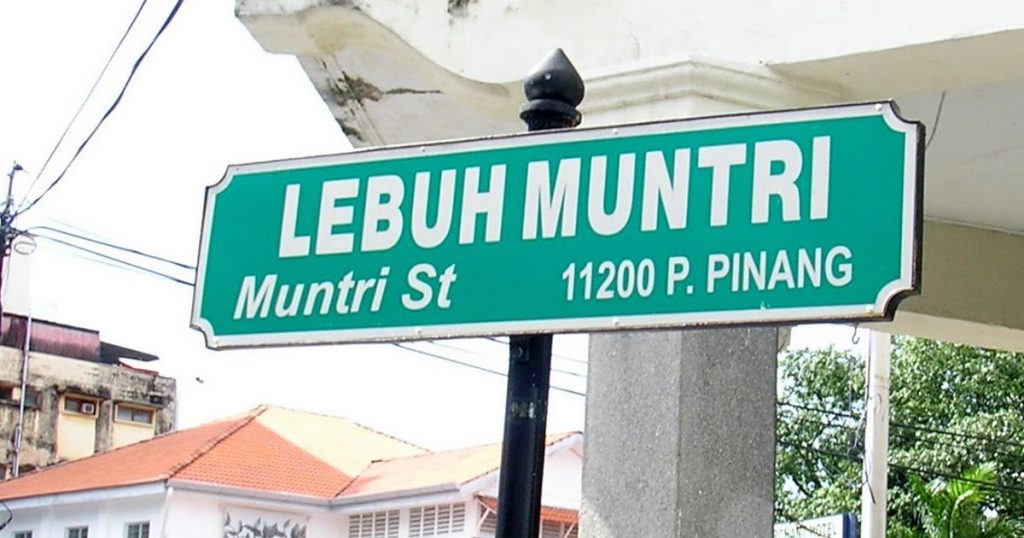
Muntri Street
南華醫院街 Lâm-hoa-i īⁿ-ke, name after the Lam Wah Ee Hospital that used to be there.
Lorong Selamat
平安街 Phêng-an-ke, a literal translation from the Malay word.
The Cultural Significance of Hokkien Street Names
1. A Record of Early Communities
These names reflect the Chinese settler experience, their trades, and how they interacted with Penang’s multicultural society.
2. A Practical Navigation System
Before signboards and Google Maps, people identified places through practical, descriptive Hokkien terms.
3. A Living Heritage
Even today, taxi drivers, older residents, and local hawkers still use Hokkien names—preserving Penang’s cultural memory.
4. A Language Identity
Penang Hokkien is unique, blending Malay, English, and local dialects. Street names reflect this language evolution over time.
Why These Hokkien Names Matter Today
With development and rapid urban change, some old names are slowly fading. Documenting and preserving them is important to:
- Protect Penang’s intangible cultural heritage
- Help younger generations appreciate local history
- Maintain the identity of George Town as a UNESCO World Heritage Site
- Strengthen community roots through shared memory
These names are not just “old nicknames”—they are historical records that tell us how Penangites once lived, worked, prayed, and interacted.
Penang’s Hokkien street names are more than charming quirks—they are living history, passed down across generations.
They reveal the island’s multicultural past, the vibrant lives of early communities, and the evolution of Penang’s language and identity.
As the city continues to modernise, preserving and understanding these names helps us stay connected to the soul of Penang.