Official name: Lebuh Muntri
English name: Muntri Street
Hokkien name: 南華醫院街 Lâm-hua-i īnn-ke, 新海南公司街 Sin-hái-lâm-kong-si-ke, 色蘭乳巷 Sek-lân-ní-hāng
Tucked within the UNESCO World Heritage core zone of George Town, Lebuh Muntri is one of Penang’s most atmospheric heritage streets. Quietly elegant and filled with beautifully preserved pre-war shophouses, boutique hotels, cafés, bars, and historic residences, the street represents a charming blend of old-world George Town and contemporary urban culture.
Unlike some of the busier tourist streets in George Town, Lebuh Muntri offers a more refined and laid-back atmosphere. Visitors can admire heritage architecture, café hop, and explore hidden corners of the city.
Whether you are interested in Penang’s history, architecture, food scene, or heritage hospitality, Lebuh Muntri remains one of the most rewarding streets to explore in George Town.
Where Is Lebuh Muntri?
Lebuh Muntri is located in central George Town, Penang, within the UNESCO World Heritage Site. The street runs between Chulia Street and Love Lane, placing it close to many of George Town’s most famous attractions.
Nearby landmarks include:
- Cheong Fatt Tze Mansion
- Love Lane
- Armenian Street
- Kapitan Keling Mosque
- Little India
Because of its strategic location, Lebuh Muntri is often explored together with nearby heritage streets including Stewart Lane, Muntri Street, Chulia Street, and Beach Street.
Story of the Street
Lebuh Muntri, also known as Muntri Street, is one of the historic streets within the UNESCO World Heritage core zone of George Town. The street stretches from Penang Road towards Stewart Lane and intersects with Leith Street, placing it within one of the city’s oldest colonial-era neighbourhoods.
The origin of the street’s name remains a topic of discussion among historians and locals. Some believe that the name “Muntri” came from the old Malay word for “Mentri” or “Minister,” and that the street was named after Ngah Ibrahim, the Mentri of Larut and son of Long Jaafar. Others suggest that the name referred to the high-ranking colonial officials who once resided around Leith Street and Muntri Street during Penang’s early British administration period.
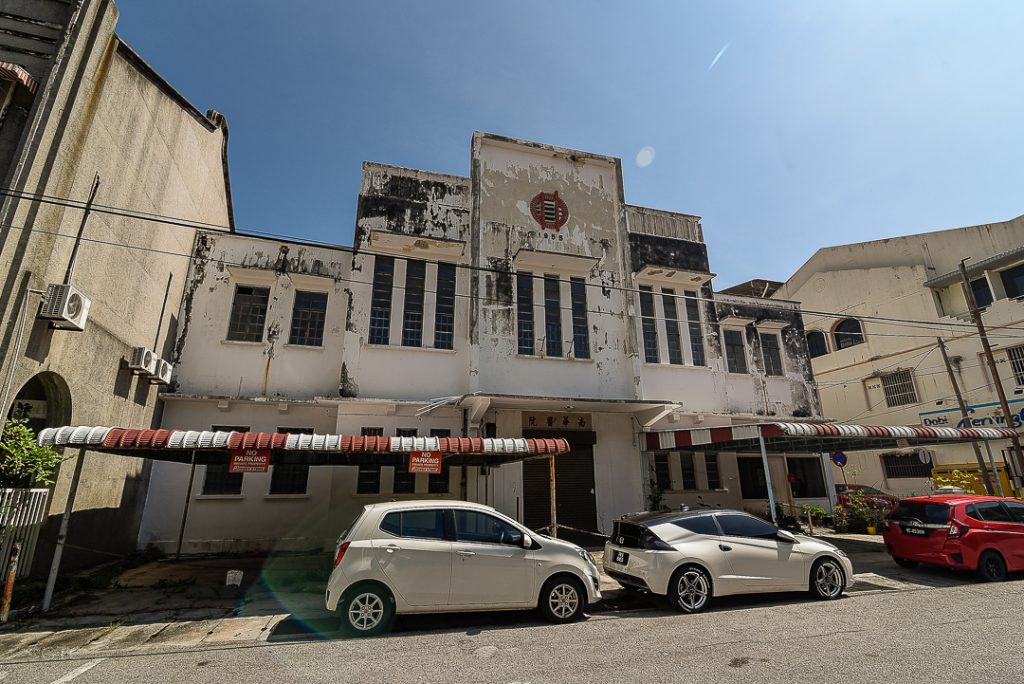
Historically, the street was strongly associated with Cantonese and Hainanese communities. Many Chinese clan associations, guild houses, and traditional organisations were established here, several of which still remain today. One of the most notable landmarks is the century-old Hainanese temple located along the street, reflecting the deep-rooted Chinese community presence in the area.
Lebuh Muntri was also famously associated with the “Mah Cheh” (妈姐) — highly respected Cantonese women who worked as professional domestic helpers for wealthy European colonial families. These women were easily recognised by their distinctive white tops and black silk trousers. Because many of them lived together around this area, older Chinese locals affectionately referred to the street as “Mah-cheh-kay” (妈姐街), meaning “Nanny Street.”
Another important historical chapter of Muntri Street was the founding of Lam Wah Ee Hospital here in 1883. Originally established as a charitable hospital serving poorer communities, the institution later grew into one of Penang’s most recognised medical organisations. Because of this, the street was also known in Hokkien as “Lâm-hoa-i īⁿ-ke” (南华医院街), meaning “Lam Wah Ee Hospital Street.” Another traditional Hokkien name for the road was “Sin-hái-lâm-kong-si-ke” (新海南公司街), referring to the new Hainanese association located here.
Today, Lebuh Muntri stands as a beautiful example of how Penang’s living heritage continues to evolve — where colonial history, Chinese community culture, architecture, and modern urban creativity coexist within one historic street.
What Makes Lebuh Muntri Special?
Lebuh Muntri stands out because it combines:
- Heritage architecture
- Boutique hospitality
- Café culture
- Nightlife experiences
- Historic atmosphere
- Walkable urban charm
- Restored pre-war buildings
The street feels quieter and more intimate compared to heavily crowded tourist streets, making it especially popular among couples, photographers, international travellers, and café hoppers.
Things to Do on Lebuh Muntri
Admire the Heritage Architecture
One of the main attractions of Lebuh Muntri is its beautiful collection of restored pre-war buildings.
Visitors can spot:
- Straits Eclectic shophouses
- Colonial-style facades
- Timber shutters
- Decorative plasterwork
- Traditional five-foot ways
- Vintage signboards
The street is especially photogenic during the early morning and golden hour periods.
Stay in a Heritage Boutique Hotel
Lebuh Muntri is home to some of George Town’s most charming boutique heritage hotels.
Many restored properties combine:
- Historic architecture
- Courtyard designs
- Antique furniture
- Modern comfort
- Local heritage aesthetics
Staying here allows visitors to fully experience George Town’s heritage atmosphere.
Café Hopping
Lebuh Muntri and its surrounding streets are filled with stylish cafés and dessert spots.
Visitors can enjoy:
- Specialty coffee
- Artisan pastries
- Brunch cafés
- Heritage-inspired interiors
- Contemporary café culture
Many cafés occupy restored shophouses that preserve original architectural details.
Photography and Street Exploration
The combination of heritage buildings, narrow lanes, textured walls, and vintage architecture makes Lebuh Muntri ideal for photography and slow urban exploration.
Popular photography subjects include:
- Heritage facades
- Street life
- Traditional windows and doors
- Boutique hotel exteriors
- Nighttime street atmosphere
Significant Buildings & Landmarks Around Muntri Street
Hainan Thean Hou Temple 天后宫

Penang Hainan Temple is also known as Thean Hou Kong Temple. The Hainanese community established the temple in 1866. Thean Hou Kong temple is dedicated to the Taoist Deity Mazu (妈祖), who is believed to be the protector of seafarers. The temple was then moved to its current location on Muntri Street in 1895 with the fundings and donations collected from the faithful devotees.
In 1925, Penang Kheng Chew Hooi Kuan Clan Association (槟州琼州会馆) was formed with the temple as its headquarters. The name Kheng Chew is a reference to the village on Hainan Island where the temple’s founders originated. The association established Aik Hua School in 1955. The school was constructed next to the Hainan Temple. Then, the name of the association was changed to the Hainan Clan Association in 1991 in order to embrace a wider ethnic identity.
The temple is built in the Hainanese style. Moreover, the elaborate stone carvings on the front of the building which were created by craftsmen were brought over from China in 1995 to mark the centenary of the temple’s construction.
Wooi Ning Wooi Koon 会甯会馆

Wooi Ning Wooi Koon is a Cantonese district association located next to Aik Hua School. Now, the ground floor of the building has been turned into a business premise, which is a textile wholesaler.
Penang Goldsmith Association

Another name for Penang Goldsmith Association is “Penang Ta Kam Hong”. It is the biggest Chinese goldsmith association in Malaysia. Besides, founded in 1832, it is also the oldest goldsmith association in Penang. The members from the association are mostly goldsmiths of Cantonese descent who came from Guangdong Province in southern China. Meanwhile, the building also serves as the guild’s temple, Voo Cheng Koo Mew. It was built in 1903 to worship the patron deity of goldsmiths, Wu Ching.
Penang Sao Lim Athletic Association
Penang Sao Lim Athletic Association is a martial arts association in Penang. This association was established by the Buddhist monk, Monnik Sik Koh Sum. It was founded in 1956 to teach the martial arts to the locals. The term “Sao Lim” is the Hokkien pronunciation for Shaolin Kung Fu (少林功夫).
Leong See Kah Miew Old Building 梁氏家庙

Leong See Kah Miew is the clan association of the Chinese holding the surname Leong. The name translated as Leong Clan Ancestral Temple. It was founded by people surnamed Leong, who hailed from Guangdong in 1871. The old clan temple was used until 1966 when the building was too old for repair. Thus, the three-storey association premise has moved to Perak Road and officially opened in 2020.
Koo Suo Kwong Choon Tong 姑苏广存堂
Koo Suo Kwong Choon Tong is a Cantonese tea shop and restaurant association. It occupies a double-storey townhouse at Muntri Street.
Traditional Pre-War Shophouses
Many of the buildings along Lebuh Muntri remain privately owned heritage shophouses that preserve the street’s historic identity.
Several of these structures have been carefully restored into:
- Boutique hotels
- Cafés
- Restaurants
- Art spaces
- Lifestyle businesses
Their preservation contributes significantly to George Town’s UNESCO World Heritage character.
Where to Stay
Modern Hotel George Town

Modern Hotel Georgetown is a newly renovated hotel. It is residing in a classy heritage Art Nouveau building which was a budget hotel. In fact, this Instagram-worthy hotel includes a mixture of vintage and modern look with a classy black and white interior.
The building was built in 1920 and has served as retail shops, with one of its significant business occupied by an optician. In fact, the hotel has preserved one of its signage ‘The World Optical Co’ at the storefront. If you have ever noticed, the second floor of the building has always been ‘Modern Hotel’.
One century later, the whole building is refurbished with its heritage architecture preserved, and they had their grand opening in January 2020. The hotel offers 5 types of room, ranging from Superior Single Room to Deluxe Double Room Bathtub with Balcony. With its strategic location and spacious room, it is one of the best staycations in George Town.
The Southern Boutique Hotel
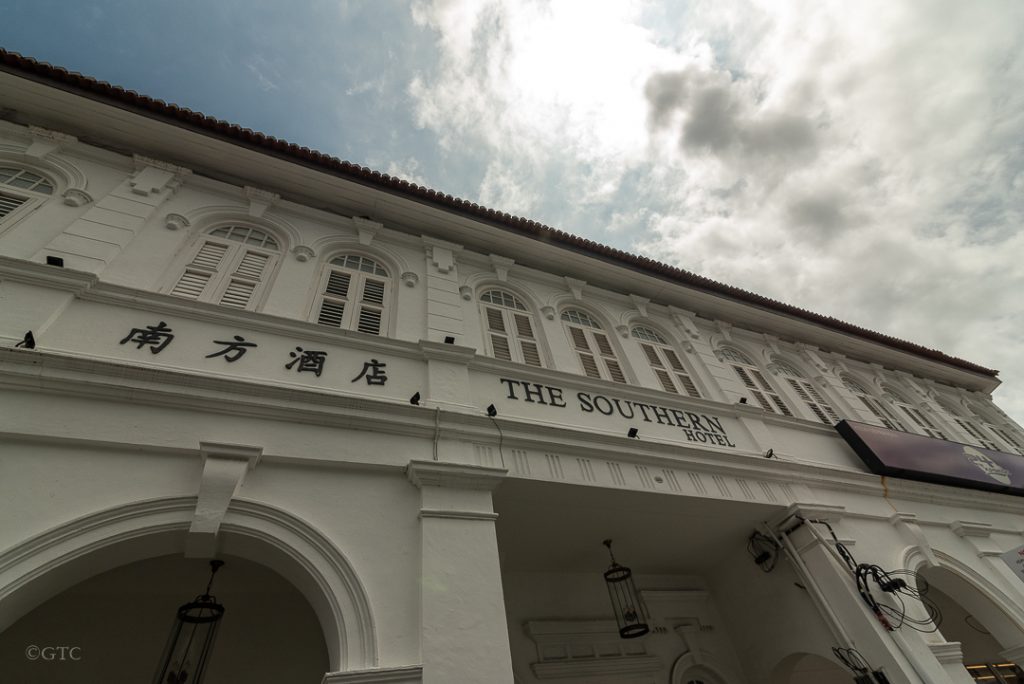
The Southern Boutique Hotel is housed in a double-storey heritage building that was built in 1924. This contemporary boutique hotel uses white colour as their main design concept. For instance, the clean lines and classic elements give a strong vibe on the grand elegance of the British colonial era. The hotel provides 3 types of room, such as Superior Double Room, Deluxe Double Room, and Family Room.
108, Lebuh Muntri, 10200 George Town, Penang.
Website | Instagram | Facebook
Muntri Grove
Muntri Grove was originally a row of 10 modest houses built as living quarters for the Mah-cheh. These double-storey houses were built in the 19th century. Then, in 2013, restoration works started. The interior of the hotel uses minimal palettes to create contemporary lines which provide a light and airy ambiance to the rooms. However, there is only one type of room here, which are Deluxe King Rooms that cater to couples who want a littler romantic experience.
Website | Instagram | Facebook
Muntri Mews


Muntri Mews is a collection of Edwardian era buildings that was transformed into a contemporary and affordable luxury accommodation located in the heart of George Town. This hotel combines both antique and modern furnishings while preserving the Straits Eclectic aesthetic. They offer three main types of room, which are Mews Standard Room, Terrace Suite, and Loft Suite.
Website | Instagram | Facebook
Muntri Heritage Guesthouse
Muntri House sets in a traditional Chinese clan house. This homestay provides basic, comfortable air-conditioned rooms with free Wi-Fi. Furthermore, they offer 6 types of room, ranging from private rooms to dormitory rooms.
What to See
Street Art: “One Leg Kicks All” Sculpture

The “One Leg Kicks All” steel-rod sculpture at Muntri Street is based on a caricature by Tang Mun Kian. This sculpture portrays the characteristics of a Mah-cheh (妈姐), or some called them as “Amah” (阿嬷). As their jobs and responsibilities cover the whole work from cooking, cleaning to caring for children, they called themselves “Yat-keok-tet” which means “one leg kicks all” in Cantonese.
Street Art: “Win Win Situation” Sculpture
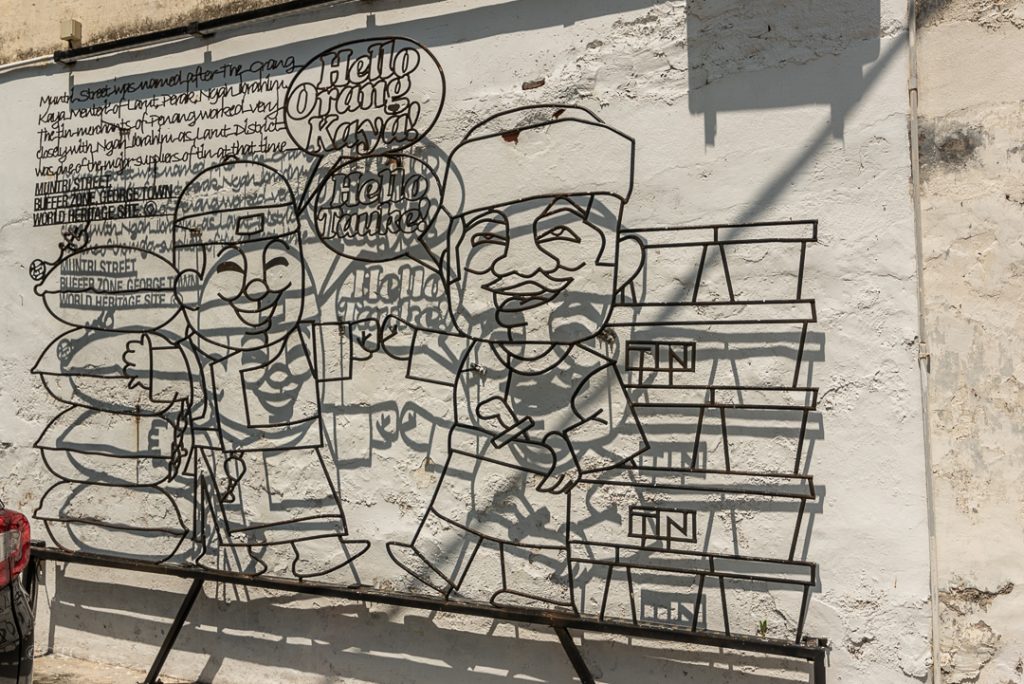
The “Win Win Situation” sculpture is based on the artwork by Julian “Lefty” Kam. Muntri Street was the commercial trading link between the Orang Kaya Mantri or Ruler of Larut, and the Chinese traders of Penang who controlled the mining and melting of tin ore. This sculpture portrays a Chinese trader called Tauke greeting the ruler of Larut, Orang Kaya, before making deal of tin trading.
Mural: “Little Girl in Blue” aka “Kungfu Girl”

The “Little Girl in Blue” is another name for “Kungfu Girl”. It is an amazing street mural by Ernest Zacharevic. The model for the mural was apparently an eight-year-old girl at an art school. The face expression as well as the light on her clothes and hair making it very lively. Besides, the size of the mural is very impressive and the windows are a part of the art piece too.
Mural: “Big Mouth” by Gabriel Pitcher

The “Big Mouth” mural by Gabriel Pitcher is painted above an archway at the Ryokan Muntri Boutique Hostel. This mural is very creative as Gabriel makes excellent use of an awkward space above and to the sides of an archway.
What to Eat
Gala House

Gala House is a retro-themed restaurant and bar that started its business in 2013. The menu features two different sets for lunch and dinner respectively. It offers Asian Western fusion cuisines. For instance, some of their special dishes include Clams in Wine & Fresh Herb Broth, Kimchi Salmon Spaghetti, Cheddar Ranch, Orang Kaya Coffee and more.
Sri Wangi Selera Ibunda
Sri Wangi Selera Ibunda is a restaurant that offers Malay food. The owner is a pair of husband and wife which the husband is from Bangladesh and the wife is from Indonesia. They serve authentic Malay food such as Nasi Goreng Biasa, Ayam Merah, Ayam Penyet, and more.
Emily’s Steakhouse
Originated from the UK, Emily’s Steakhouse has two branches in Malaysia, one in Penang and the other one in Kuala Lumpur. Previously located at Victoria Street, the restaurant expanded and moved to Muntri Street in September 2020. With the perfect tenderness and taste, this place serves one of the best steaks in town.
Mews Cafe

Mews Cafe is most probably one of the finest cafes in Muntri Street. It serves authentic Malay food in cozy restaurant settings. They prepare their food with fresh local ingredients as well as homemade sauces and spices. However, the price is slightly expensive. Some of their must-try dishes are Nasi Lemak, Beef Rendang, Ikan Sambal, Chai Creme Brulee and more.
How to Explore Lebuh Muntri
Walking
Walking remains the best way to experience the street and nearby heritage attractions.
Bicycle Exploration
Many visitors rent bicycles to explore:
- George Town heritage streets
- Hidden lanes
- Street art areas
- Café districts
Free CAT Bus
The Penang Free CAT Bus stops near several nearby heritage attractions and offers a convenient way to move around central George Town.
Explore more with the FREE Cat Shuttle Bus.
Nearby Attractions
Lebuh Muntri is close to:
- Armenian Street
- Khoo Kongsi
- Little India
- Penang Street Art
- Kapitan Keling Mosque
Tips for Visiting Lebuh Muntri
- Wear comfortable walking shoes
- Visit both day and night for different atmospheres
- Explore nearby side lanes
- Bring a camera for heritage photography
- Make café reservations during weekends if needed
- Respect residents and heritage buildings
- Combine the visit with nearby streets and landmarks
FAQ About Lebuh Muntri
Is Lebuh Muntri worth visiting?
Yes. Lebuh Muntri is one of George Town’s most charming heritage streets, combining architecture, cafés, and boutique hotels.
What is Lebuh Muntri famous for?
The street is known for:
- Heritage buildings
- Boutique hotels
- Café culture
- Heritage atmosphere
Is Lebuh Muntri part of the UNESCO World Heritage Site?
Yes. The street lies within George Town’s UNESCO World Heritage core zone.
Are there hotels on Lebuh Muntri?
Yes. The area is famous for its heritage boutique hotels and restored shophouse accommodations.
Can you walk around Lebuh Muntri?
Yes. The area is highly walkable and best explored slowly on foot.
Lebuh Muntri beautifully represents the evolving character of George Town — where heritage preservation, local culture, modern hospitality, and urban creativity coexist naturally.
Whether you are visiting for the architecture, cafés, boutique hotels, nightlife, or simply the atmosphere, Lebuh Muntri remains one of Penang’s most elegant and memorable heritage streets.