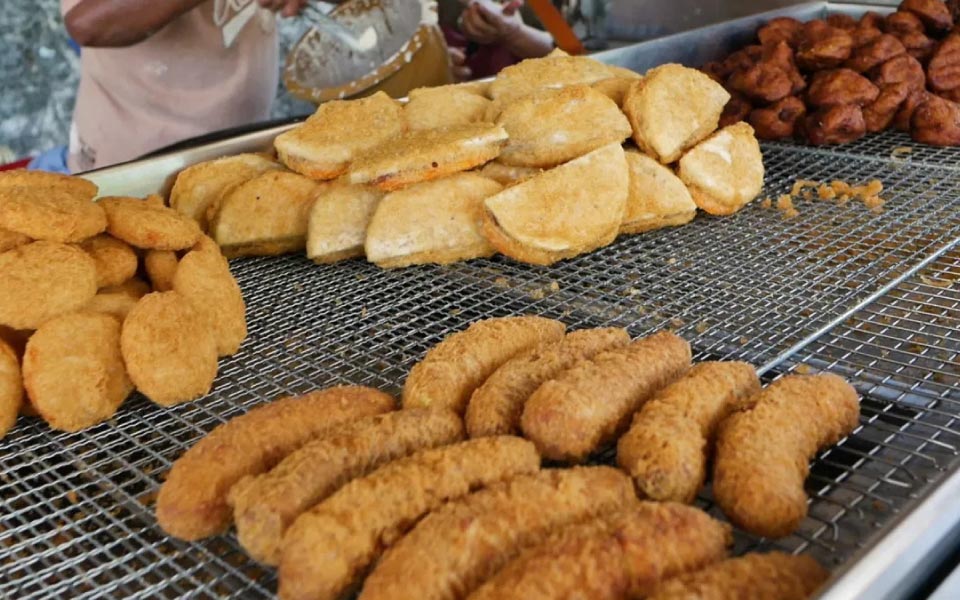
Why Penang is Malaysia’s Street Food Capital
Penang is widely regarded as the street food capital of Malaysia, and for good reason.
The island’s culinary identity is shaped by Malay, Chinese, Indian, and Peranakan influences, creating a food culture that is deeply diverse, affordable, and incredibly flavourful.
What makes Penang street food special:
- Recipes passed down through generations
- Hawker stalls specialising in one signature dish
- Bold flavours: smoky, spicy, tangy, savoury
- Affordable prices (RM5–RM15 per dish)
- Strong cultural and historical roots
Unlike modern dining trends, Penang’s hawker scene remains authentic and deeply local — making it one of the best street food destinations in the world.
Must-Try Street Food in Penang
Char Koay Teow (炒粿条)
Char Koay Teow is arguably the most iconic street food in Penang, known for its intense smoky aroma and rich flavours. Flat rice noodles are stir-fried over high heat with prawns, cockles, Chinese sausage, egg (often duck egg), bean sprouts, and chives.
What sets Penang’s version apart is the unmistakable “wok hei” (breath of the wok) — a charred, smoky depth achieved through skill and fire control.
Where to try:
- Siam Road Char Koay Teow (legendary, charcoal fire)
- Presgrave Street Hawker Stalls
- Lorong Selamat (famous duck egg version)
Assam Laksa (亚参叻沙)
Assam Laksa is a bold, tangy, and slightly spicy noodle soup made with a mackerel-based broth infused with tamarind, lemongrass, and herbs. It’s topped with shredded fish, cucumber, onions, mint, pineapple, and a spoonful of shrimp paste (hae ko).
The flavour profile is complex — sour, fishy, sweet, and herbal all at once — making it one of the most unique dishes in Southeast Asia.
Where to try:
- Air Itam Laksa (world-famous hillside stall)
- Penang Road Famous Laksa
Penang Hokkien Mee (虾面)
Unlike KL’s dry version, Penang Hokkien Mee is a rich prawn noodle soup with a deep, reddish broth made by simmering prawn shells and spices for hours.
It’s served with yellow noodles and rice vermicelli, topped with prawns, pork slices, egg, fried shallots, and sambal.
Where to try:
- 888 Hokkien Mee (Lebuh Presgrave)
- Green House Hokkien Mee (night favourite)
Nasi Kandar
Nasi Kandar is a flavour-packed rice dish served with a variety of curries and side dishes like fried chicken, beef rendang, squid, and vegetables.
The signature move is asking for “banjir”, where multiple curries are poured over the rice — creating a rich, layered flavour explosion.
Where to try:
- Line Clear Nasi Kandar
- Nasi Kandar Beratur
- Hameediyah Restaurant (historic institution)
Oh Chien (Oyster Omelette, 蚝煎)
Oh Chien is a crispy, savoury oyster omelette made with eggs, starch, and fresh oysters.
Penang’s version tends to be crispier, with a slightly chewy interior and a fragrant fish sauce-based seasoning.
Where to try:
- New Lane Hawker Centre
- Lorong Selamat stalls
- Gurney Drive Hawker Centre
Char Koay Kak (炒粿角)
Char Koay Kak is Penang’s version of fried radish cake (chai tow kway), stir-fried with egg, garlic, soy sauce, and preserved radish.
It comes in “white” (lighter) or “black” (sweet soy sauce) versions.
Where to try:
- Kimberley Street Night Market
- Presgrave Street Hawker Centre
- Macallum Street stalls
Penang Chee Cheong Fun (猪肠粉)
Unlike the Hong Kong version, Penang Chee Cheong Fun is served with a unique combination of sweet sauce, chilli paste, shrimp paste, and sesame seeds.
The result is a sweet, spicy, and umami-rich snack.
Where to try:
- Cecil Street Market
- Air Itam Market
- Kimberley Street hawkers
Curry Mee
Curry Mee is a rich, coconut-based noodle soup with a spicy, aromatic broth.
It’s typically served with tofu puffs, cockles, shrimp, cuttlefish, and a spoonful of chilli paste.
Where to try:
- Sisters Curry Mee (Air Itam)
- Green House Curry Mee
- Ayer Itam market stalls
Cendol
Cendol is Penang’s ultimate heat-relief dessert, made with shaved ice, coconut milk, pandan jelly, red beans, and rich gula melaka syrup.
Where to try:
- Penang Road Famous Teochew Cendol
- Swatow Lane Cendol
- Gurney Drive stalls
Nyonya Kuih
Nyonya kuih are traditional Peranakan desserts made with coconut milk, pandan, glutinous rice, and gula melaka.
They are colourful, delicate, and deeply rooted in heritage.
Where to try:
- Moh Teng Pheow Nyonya Koay
- Cecil Street Market
- Local morning markets
Mee Goreng
Penang-style Mee Goreng is a spicy fried noodle dish cooked with yellow noodles, tofu, potatoes, squid, egg, and bean sprouts in a rich tomato-chilli sauce.
It’s bold, slightly sweet, spicy, and deeply satisfying.
Where to try:
- Bangkok Lane Mee Goreng
- Padang Brown stalls
- Various mamak stalls across George Town
Penang Rojak
Penang Rojak — often referred to as rojak buah (fruit rojak) — is a refreshing yet bold street snack made primarily with fresh fruits such as guava, pineapple, cucumber, jicama, and sometimes mango.
What makes it uniquely Penang is the thick, dark sauce made from shrimp paste (hae ko), sugar, lime, and chilli, creating a complex balance of sweet, tangy, spicy, and umami flavours. It’s usually topped with crushed peanuts and sesame seeds for added texture.
Where to try:
- Lebuh Keng Kwee Rojak (near Penang Road Famous Cendol)
- Macallum Street Hawker Centre
- Local roadside fruit rojak stalls around George Town
Best Places for Street Food in Penang
Gurney Drive Hawker Centre
Gurney Drive Hawker Centre is one of the most famous street food destinations in Penang, especially for first-time visitors. Located along the seafront, it brings together a wide variety of Penang’s most iconic dishes in one place.
You’ll find everything from char koay teow and assam laksa to rojak, satay, and cendol — all within walking distance. The atmosphere is lively and slightly chaotic, especially at night, with rows of stalls and shared tables facing the sea.
While it’s more tourist-oriented compared to other spots, it remains a convenient introduction to Penang street food.
Best for: First-time visitors, variety, easy access
Tip: Visit after sunset for the full experience
Chulia Street Night Market
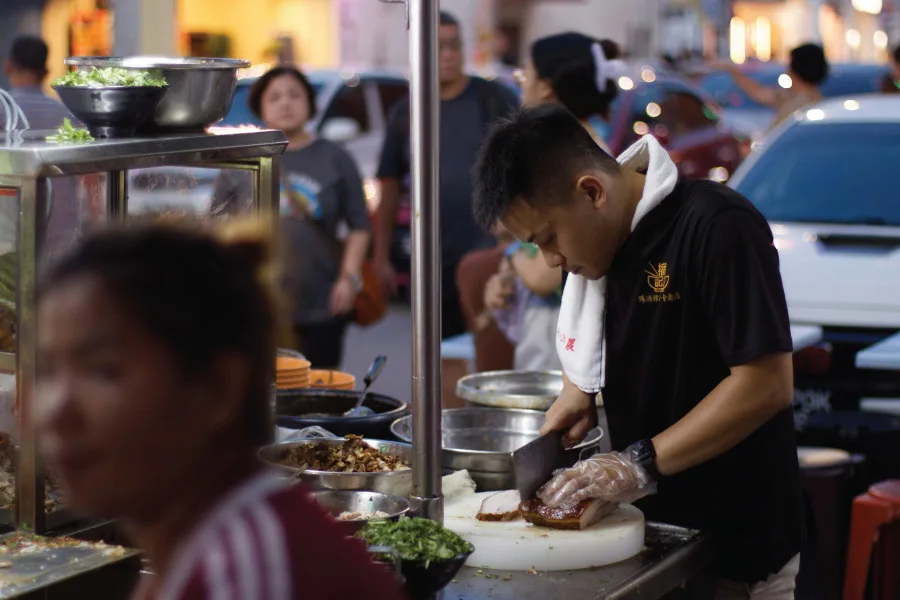
Chulia Street transforms into a bustling street food hub at night, offering one of the most authentic and atmospheric hawker experiences in George Town.
As the sun sets, roadside stalls begin operating along the street, serving favourites like char koay teow, wantan mee, satay, and seafood dishes. The setting feels raw and energetic — with smoke from woks, bright lights, and crowds of locals and travellers mingling together.
Located in the heart of the heritage zone, it’s also surrounded by cafés, bars, and hostels, making it a key nightlife and food destination.
Best for: Night street food, atmosphere, central location
Tip: Walk the entire street before deciding what to eat
New Lane Hawker Centre
New Lane Hawker Centre, also known as Lorong Baru, is a long stretch of roadside hawker stalls that comes alive in the evening.
Compared to Gurney Drive, New Lane feels more local and less commercial, with many well-established stalls that have built loyal followings over the years. The variety is excellent — from oyster omelette and Hokkien mee to satay, desserts, and stir-fried dishes.
Tables are set up along the street, creating a communal dining experience where you can order from multiple stalls and eat everything together.
Best for: Local vibe, wide selection, night dining
Tip: Come hungry — portions are small, so you can try multiple dishes
Cecil Street Market
Cecil Street Market is a local favourite for breakfast and lunch, offering a completely different street food experience compared to the night scenes.
Located within a traditional wet market, it’s where locals go for their daily meals — serving dishes like chee cheong fun, curry mee, Hokkien mee, and kuih. The atmosphere is more grounded and authentic, with simple seating and a steady flow of regular customers.
This is one of the best places to experience real, everyday Penang hawker culture without the tourist crowds.
Best for: Morning food, local experience, traditional dishes
Tip: Visit early (7am–10am) for the best selection
Explore more different hawker centres to experience in Penang.
Street Food Prices in Penang
Penang remains one of the most affordable food destinations in Southeast Asia.
Typical prices:
- Noodles (Char Koay Teow, Laksa): RM6–RM12
- Rice dishes (Nasi Kandar): RM8–RM15
- Snacks & desserts: RM3–RM8
Compared to Kuala Lumpur, Penang street food is generally cheaper and more traditional.
Tips for Eating Street Food in Penang
- Go where locals queue – a good sign of quality
- Visit early – popular stalls sell out fast
- Bring cash – many stalls don’t accept e-wallets
- Be open to sharing tables
- Expect heat and crowds – it’s part of the experience
Best Time to Explore Street Food
- Morning: Local markets (Cecil Street, Air Itam)
- Afternoon: Hidden neighbourhood stalls
- Night: Chulia Street, New Lane, Gurney Drive
Is Street Food in Penang Safe?
Yes — Penang’s street food is generally safe and hygienic.
Look for stalls that:
- Have high turnover (fresh food)
- Maintain clean cooking areas
- Are popular with locals
FAQs About Street Food in Penang
What is the most famous street food in Penang?
Char Koay Teow, Assam Laksa, and Penang Hokkien Mee are among the most iconic dishes.
Where can I find the best street food in Penang?
Top spots include Gurney Drive, Chulia Street, New Lane, and local markets like Cecil Street.
Is Penang street food expensive?
No — most dishes cost under RM15, making it very affordable.
What time is best for street food in Penang?
Night time offers the widest variety, but mornings are best for local breakfast dishes.
Is Penang better than Kuala Lumpur for street food?
Penang is generally considered better for traditional street food, while Kuala Lumpur offers more variety and modern dining.
Why You Must Experience Penang Street Food
Street food in Penang is more than just food — it’s a reflection of the island’s history, culture, and identity.
From smoky noodles to tangy soups and sweet desserts, every dish tells a story.
If you’re visiting Penang, exploring its street food scene isn’t optional — it’s essential.